Examen d'admission sélectif
Le parcours clinique est examiné avant toute confirmation, afin que la cohorte de cinq médecins reste alignée sur le niveau et la finalité du programme.

Éducation médicale postuniversitaire ATDERA
ÉDITION RÉALISÉE · 5 MÉDECINS · DA VINCI XI · URLA & IZMIR · 28-30 AOÛT 2026
Sous la direction du Prof. Dr. Fatih Şendağ
Formation sur le système chirurgical Da Vinci XI
Un programme intensif de deux jours en chirurgie gynécologique robotique, allant de l'enseignement théorique au travail sur simulateur Da Vinci XI, à la pratique en dry lab et à l'exposition au bloc opératoire.
La cohorte du 28–30 août 2026 a été menée à terme. Les demandes concernant la prochaine édition sont sans engagement.
Architecture de la formation
Le parcours est délibérément structuré comme une expérience continue d'éducation clinique — de l'examen d'admission jusqu'à l'enseignement dirigé par le corps enseignant, la simulation pratique et l'exposition au bloc opératoire en direct.
Le parcours clinique est examiné avant toute confirmation, afin que la cohorte de cinq médecins reste alignée sur le niveau et la finalité du programme.
L'enseignement théorique porte sur les indications, l'installation de la patiente, le placement des trocarts, le docking, les complications et les domaines d'application en gynécologie.
Les participants passent à la prise en main de la console Da Vinci XI, aux habiletés manuelles, au docking, au chargement des instruments, à la suture et aux applications d'énergie.
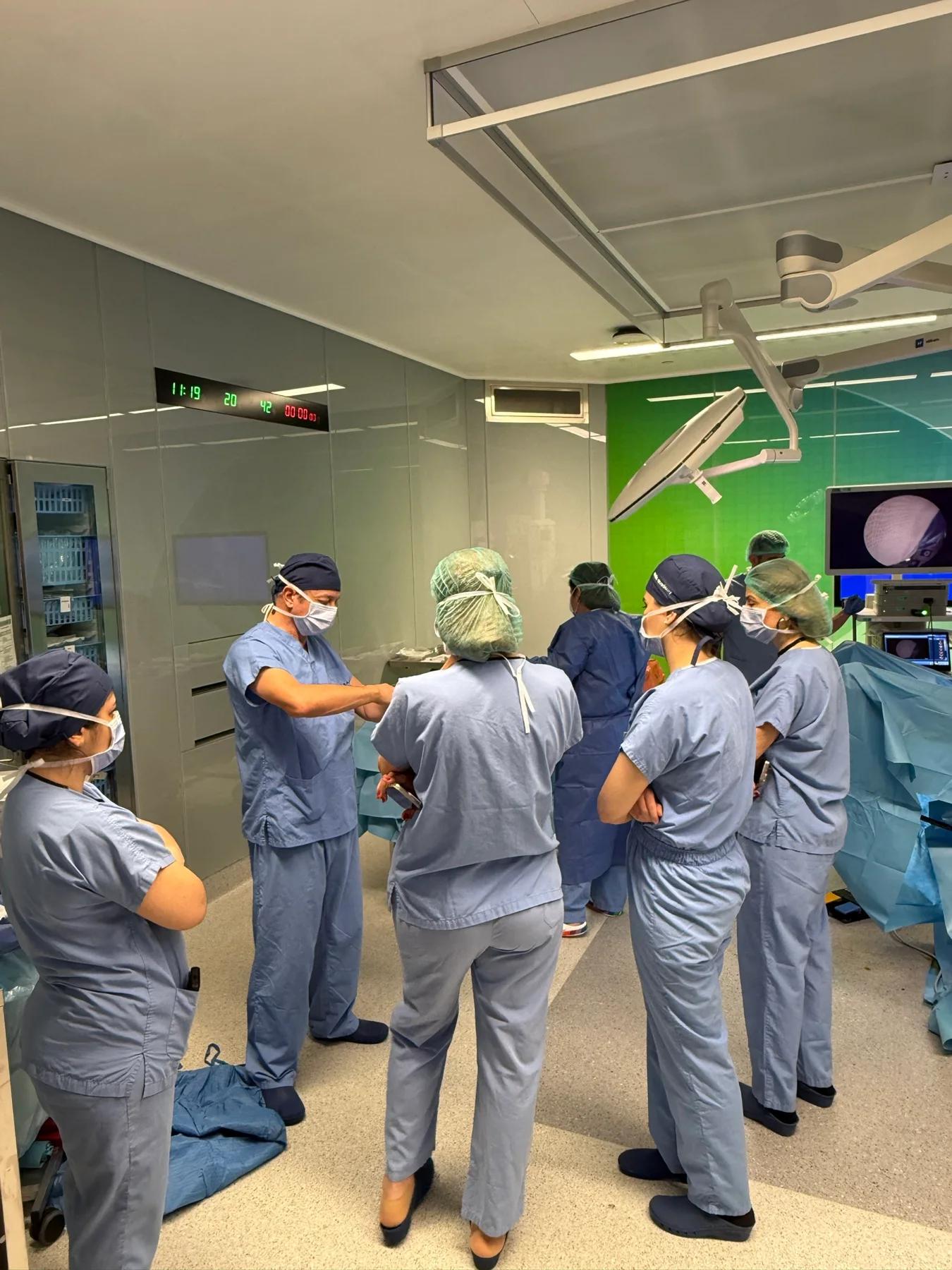
La dernière journée de formation comprend une exposition à la chirurgie en direct dans le cadre hospitalier confirmé et selon les protocoles cliniques applicables.
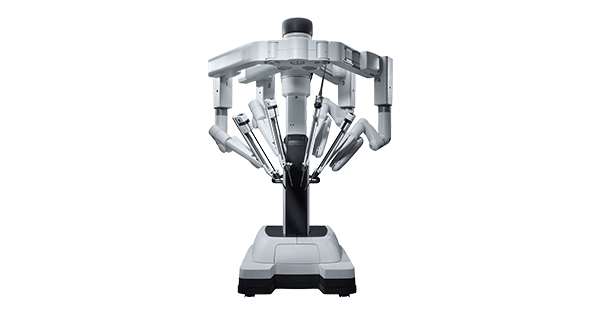
Système chirurgical Da Vinci XI
Le programme structure l'exposition au Da Vinci XI autour d'une prise en main pratique : architecture du système, utilisation de la console du chirurgien, logique de docking, chargement des instruments robotiques et habiletés appliquées en dry lab avant l'observation au bloc opératoire.
Pourquoi ce programme
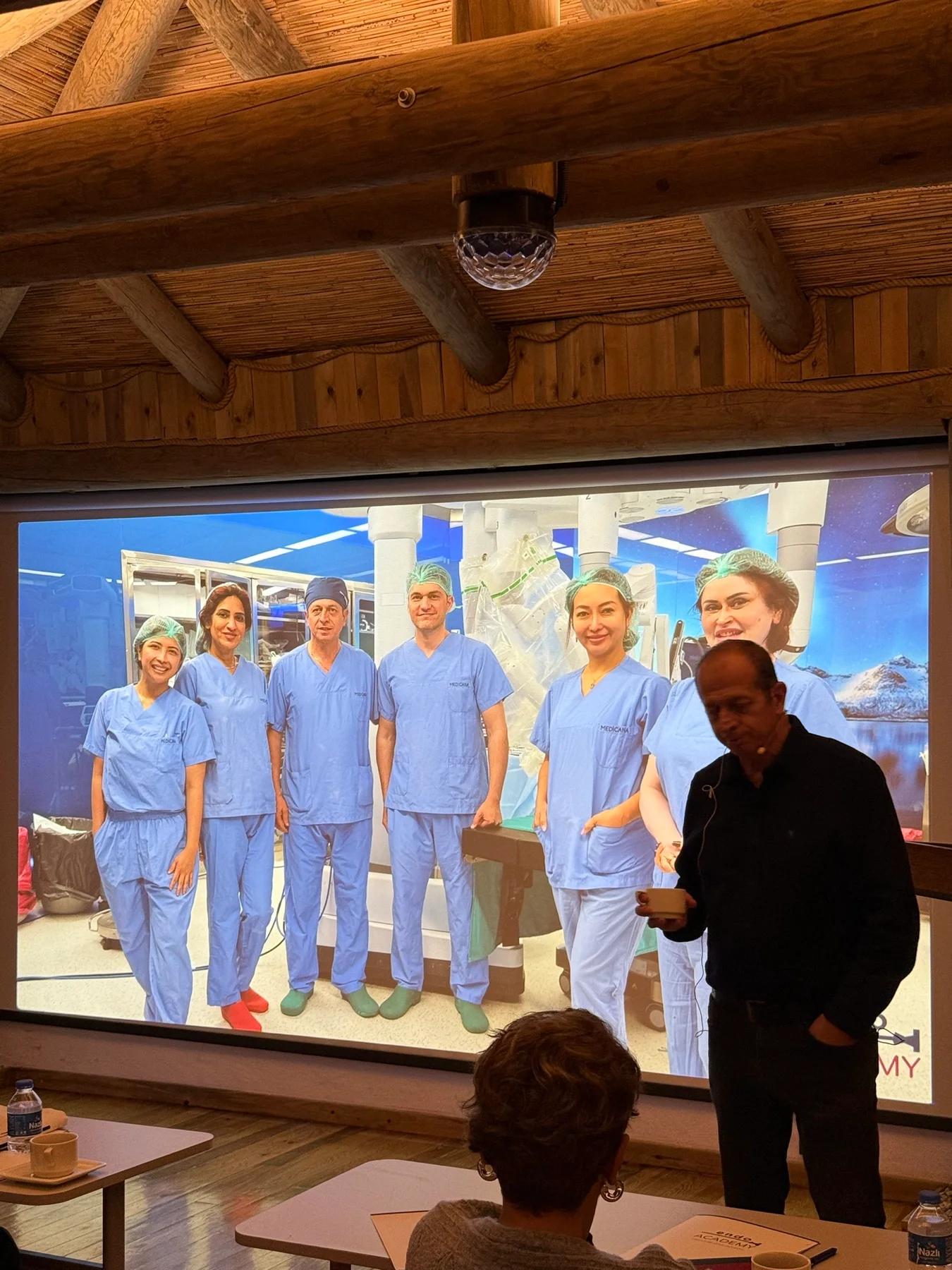
Le programme est délibérément resserré : une petite cohorte de médecins, un enseignement direct par un seul chirurgien-enseignant senior, et une séquence qui va des principes chirurgicaux à la familiarisation avec la console, à la pratique en dry lab et à l'exposition au bloc opératoire.
La cohorte est volontairement restreinte afin que chaque participant bénéficie d'une interaction substantielle avec le corps enseignant sur les volets théorique, simulateur et dry lab.
La formation est centrée sur la plateforme Da Vinci XI : présentation du système, utilisation de la console, logique de docking, chargement des instruments et habiletés appliquées.
Le contenu est structuré autour de la chirurgie gynécologique robotique : hystérectomie, myomectomie, endométriose, prolapsus et domaines d'application apparentés.
Programme
Les participants arrivent le 28 août pour l'enregistrement et le dîner de bienvenue. La séquence formelle de formation se déroule les 29 et 30 août, de l'enseignement théorique au simulateur, au dry lab et à l'exposition au bloc opératoire en direct.
Vendredi 28 août 2026
Urlachi Farm, Urla, Izmir
Arrivée des participants, installation et enregistrement au programme à Urlachi Farm.
Dîner de bienvenue informel avant le début de la séquence formelle de formation.
Samedi 29 août 2026
Urlachi Farm · Acıbadem Kent Hospital
Domaines d'application de la chirurgie robotique en gynécologie et formation à partir de vidéos opératoires.
Travail sur simulateur et pratique en dry lab.
Dimanche 30 août 2026
Acıbadem Kent Hospital
Exposition au bloc opératoire dans le cadre clinique confirmé, sous la supervision du corps enseignant du programme et selon les protocoles hospitaliers.
Directeur du programme
Professeur d'obstétrique et de gynécologie, Faculté de médecine de l'université Ege
Spécialiste en obstétrique, gynécologie et FIV
Le Prof. Dr. Fatih Şendağ est professeur d'obstétrique et de gynécologie à la Faculté de médecine de l'université Ege et spécialiste en obstétrique, gynécologie et FIV. Il préside la Société turque d'endoscopie gynécologique depuis 2011, siège au conseil consultatif de l'European Society for Gynaecological Endoscopy (ESGE) et au conseil scientifique de l'AAGL, et a fondé le premier programme d'enseignement de la chirurgie robotique de Turquie.
Le Programme de chirurgie robotique est bâti autour de l'enseignement direct du Prof. Şendağ, avec une cohorte délibérément restreinte de cinq médecins et une séquence allant de la théorie au travail sur simulateur Da Vinci XI, à la pratique en dry lab et à l'exposition au bloc opératoire.
À qui s'adresse le programme
L'admission est sélective. Les candidats sont invités à fournir un CV, les détails de leur qualification de spécialiste et les informations relatives à leur autorisation d'exercice, afin que le bureau du programme puisse évaluer l'adéquation clinique avant de confirmer une place.
Lieu et informations pratiques
Le programme se déroule entre Urlachi Farm, à Urla, et l'Acıbadem Kent Hospital, à Izmir. Les transferts sont coordonnés dans le cadre des frais de programme.
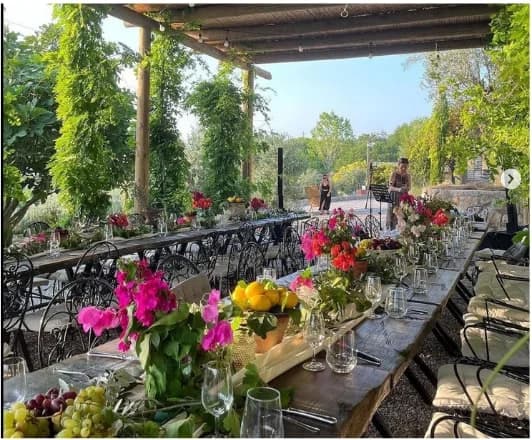
Enregistrement, installation, petits-déjeuners villageois, dîners et cadre d'accueil du programme.
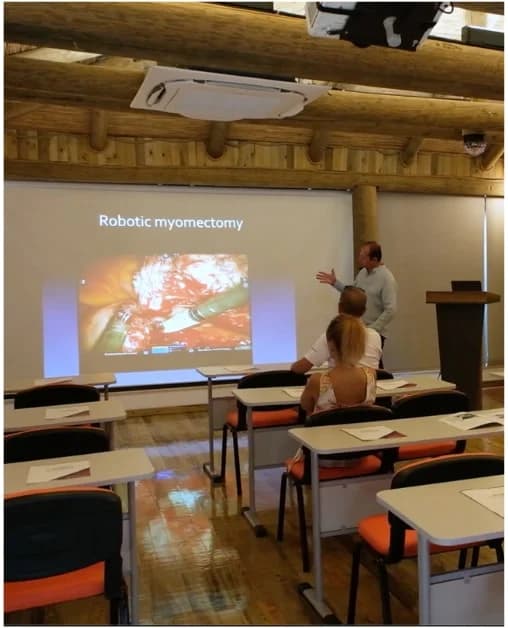
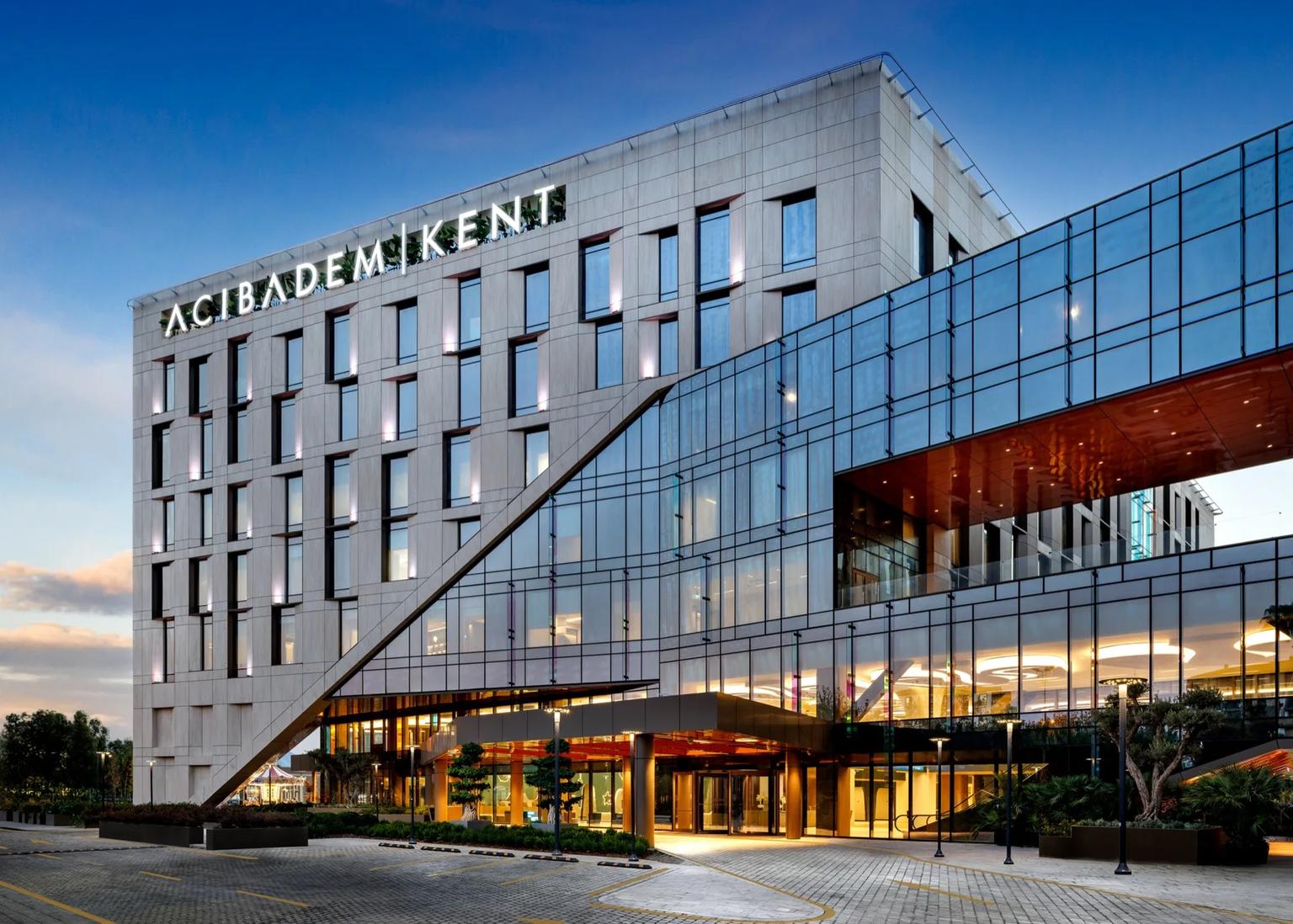
Site clinique de la formation sur simulateur Da Vinci XI et en dry lab, ainsi que du volet bloc opératoire en direct.
Les transferts aéroport et les transferts hôpital-hôtel sont inclus pour les participants admis, selon le calendrier du programme.
Frais et inclusions
Le Programme de chirurgie robotique est proposé sous la forme d'un tarif unique couvrant la séquence de formation, l'hébergement, les principaux repas et les transferts coordonnés.
Les participants qui achèvent le Programme de chirurgie robotique reçoivent un certificat DPC ATDERA ainsi qu'un certificat de présence ATDERA.
Les certificats attestent la participation à un programme structuré d'éducation médicale postuniversitaire. Ils ne remplacent ni l'autorisation d'exercice locale, ni l'accréditation hospitalière, ni l'octroi de privilèges, ni l'approbation réglementaire requise pour une pratique autonome de la chirurgie robotique.
Admissions
La cohorte du 28–30 août 2026 a été menée à terme. Laissez vos coordonnées : le bureau du programme vous contactera lorsque la prochaine édition sera programmée.
Le CV, la qualification de spécialiste et les informations relatives à l'autorisation d'exercice sont demandés après l'examen initial. Le paiement n'est demandé qu'après acceptation écrite.
FAQ
Le programme s'adresse aux médecins titulaires d'une autorisation d'exercice en gynécologie-obstétrique, ou aux médecins présentant une expérience chirurgicale gynécologique clairement pertinente. Une exposition préalable à la chirurgie laparoscopique ou mini-invasive est attendue.
La cohorte est limitée à cinq médecins afin que l'enseignement, le travail sur simulateur et la pratique en dry lab restent très ciblés.
Le paiement n'est demandé qu'après acceptation écrite. Les frais de programme sont exigibles en totalité au plus tard un mois avant la date du cours, et les modalités de paiement sont communiquées par écrit après acceptation.
Les frais de 2 800 £ comprennent le programme de deux jours, deux nuits d'hébergement, les transferts aéroport, les transferts hôpital-hôtel, deux petits-déjeuners, un déjeuner et deux dîners. Les vols internationaux, l'assurance voyage et les dépenses personnelles ne sont pas inclus.
Les participants qui achèvent le programme reçoivent un certificat DPC ATDERA ainsi qu'un certificat de présence ATDERA. Ces documents ne remplacent ni l'autorisation d'exercice locale, ni l'accréditation, ni l'octroi de privilèges.