Rolling admission · Istanbul · Delivered in English
Functional Neurosurgery & DBS Observership DBS and epilepsy surgery, where scheduled, in Istanbul
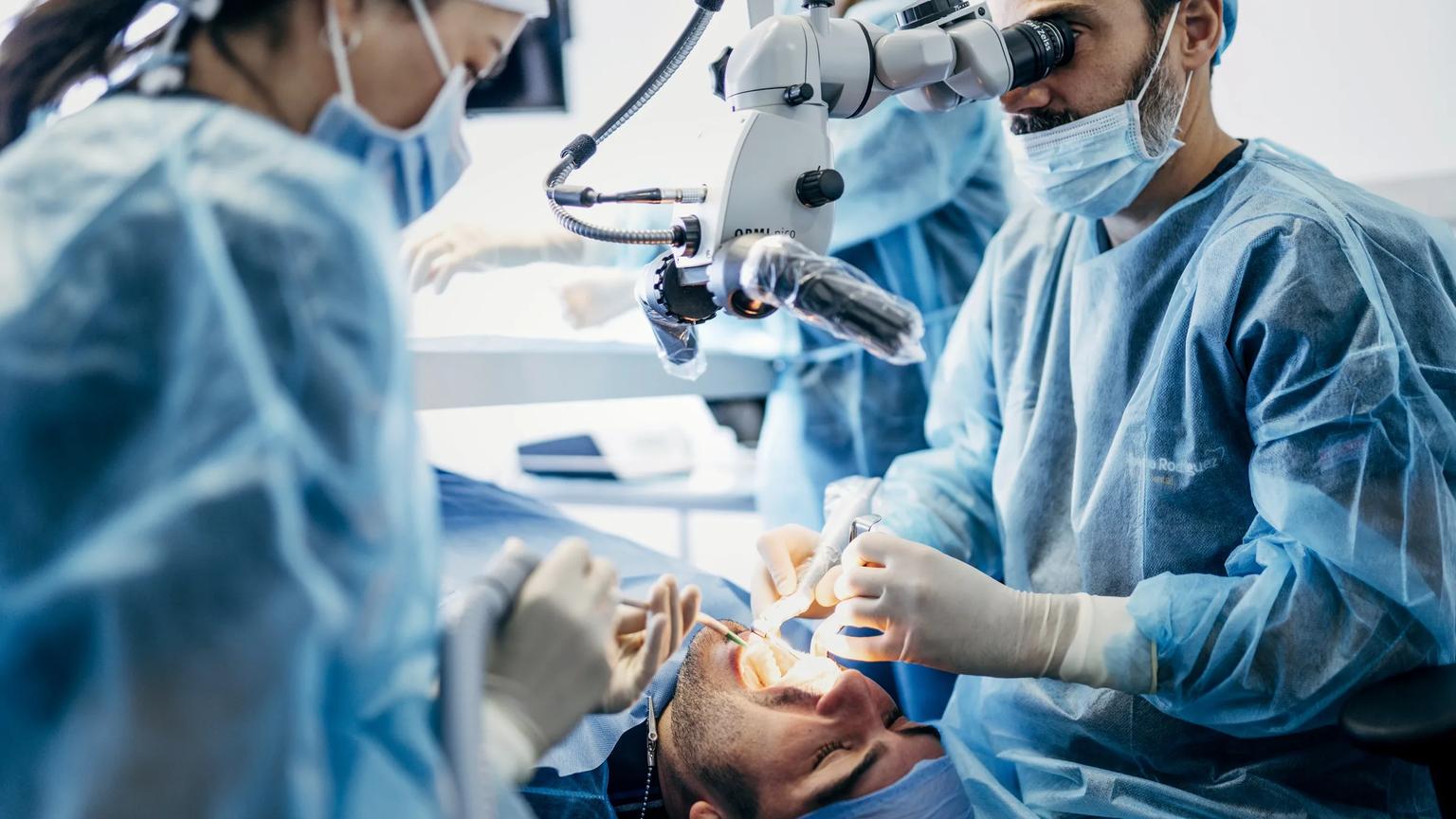
Follow how a neurosurgery department selects patients for deep-brain stimulation and epilepsy surgery, plans each target from imaging and reviews patients afterwards — on the functional cases the department schedules during your dates.
What can an observer follow in Functional Neurosurgery & DBS?
What you see depends on the department's clinical calendar during your placement; the list below describes the department's usual scope, not a guaranteed programme.
Deep-brain stimulation cases where scheduled: selection, stereotactic planning, lead placement and the decision on when to implant the pulse generator
Epilepsy surgery where scheduled, with the pre-surgical evidence it rests on — semiology, video-EEG, MRI and neuropsychology — as the team discusses it
Imaging-based targeting: how MRI and stereotactic imaging are combined to plan target and trajectory, as the team explains its method
Intraoperative physiology where used — microelectrode recording and test stimulation — and how responses are interpreted before a lead position is accepted
Post-operative imaging review, ward care and the neurosurgery outpatient clinic, where wound, device and symptom questions are discussed
DBS programming sessions only where the department schedules them during your dates — confirmed after review
Who decides that a patient is a candidate for deep-brain stimulation?
Deep-brain stimulation is an elective, function-directed operation, so candidacy is settled before anyone discusses a target. In Parkinson's disease the classic questions are whether motor symptoms still respond to levodopa, whether motor fluctuations or dyskinesia limit daily life despite optimised medication, and whether cognition, mood and imaging make surgery reasonable. Essential tremor and dystonia raise different questions about disability and medication response. A levodopa challenge, neuropsychological assessment and MRI are typical parts of the work-up, and the decision is typically shared between neurology, neurosurgery and neuropsychology, often with psychiatry.
Target choice follows the clinical problem — the subthalamic nucleus or globus pallidus internus in Parkinson's disease, the ventral intermediate nucleus of the thalamus for tremor, and the pallidal target for dystonia — and is usually planned on MRI fused with stereotactic CT. Departments differ in whether leads are placed with the patient awake, using microelectrode recording and test stimulation, or asleep with intraoperative imaging confirmation. Observers follow how the team reasons about these choices; where a patient is awake during part of the procedure, the team may limit who is in the room.
Epilepsy surgery follows a separate pathway. Resective or disconnective surgery is considered when seizures persist despite adequate trials of anti-seizure medication and the evidence — semiology, video-EEG, MRI, neuropsychology and sometimes invasive recordings — points to a resectable focus; neuromodulation is considered when it does not. After either kind of operation, care continues in follow-up: device programming, medication adjustment and repeated assessment, often led by neurology. Programming clinics are observed only where the department schedules them during your dates — confirmed after review.
How this page differs
Where the neurosurgery page describes the whole department — cranial tumour, neurovascular, paediatric, trauma and spinal work — this page concentrates on functional procedures: deep-brain stimulation, epilepsy surgery and the selection and follow-up around them. Endoscopic cranial-base and endoscopic spinal work are separate focuses.
Who applies, and which route fits?
Clinical Observership
Suits medical students in their clinical years and graduate physicians considering neurosurgery or neurology who want to see how a functional case moves from patient selection and imaging-based planning to theatre and follow-up.
Clinical Fellowship
Suits neurosurgeons with a specialist qualification who state functional neurosurgery and DBS as their interest within the neurosurgery department; because functional cases run only where the calendar allows, a full clinical cycle gives the broadest view.
What an observer does not do
Both routes are strictly observational: observers attend theatre and clinic without patient contact, do not scrub or assist, and are not assessed on any procedure.
Deep-brain stimulation and epilepsy surgery are scheduled where the calendar allows; a short placement may include neither, and no case number is guaranteed.
Programming clinics are observed only where scheduled and confirmed after review; observers never handle programmers or adjust devices.
Awake procedures may limit who can be in the room, and observers do not speak with or test patients during the procedure.
The certificate documents attendance; it confers no stereotactic or functional neurosurgery competency or procedural certification.
The two routes at a glance
The two routes side by side
Clinical Observership
Clinical Fellowship
Duration
1, 2 or 4 weeks (extension possible on request)
12 to 24 months, agreed with the host department
Who it is for
Medical students in clinical years and graduate physicians from outside Turkey
Recognised specialists and family physicians seeking advanced exposure beyond standard specialty training
Extended observational attachment to one department: daily practice, service structure and specific techniques
Certificate
Certificate of attendance issued by the host hospital and signed by its Medical Director
Certificate on completion issued under the accreditation of the affiliated university school of medicine
Start
Rotations typically begin on a Monday; dates are agreed individually
Start date planned around the date you request and the department's capacity
Before you apply
The programme is delivered in English and every applicant evidences their level with an official document.
Fees and terms are confirmed in writing after the eligibility review; they are not published on this page.
Apply three to six months ahead: departments accept only one or two observers at a time and files are reviewed in order.
State your focus in the objectives of your application. Allocation follows the department's lists during your dates.
What do candidates ask about Functional Neurosurgery & DBS?
Can neurologists apply for the clinical component?
Neurologists may apply, but the placement is an attachment to the neurosurgery department. A neurologist is eligible for the observership as a graduate physician and for the fellowship as a recognised specialist, and admission rests with the host department after reviewing your objectives. The clinical component therefore follows neurosurgery — selection discussions, planning, theatre and post-operative review. Neurology-led movement-disorder or epilepsy clinics are not part of the confirmed scope; state that interest in your application and ATDERA asks the host during the review what can be accommodated.
Does exposure include programming and follow-up?
Follow-up, yes, within the neurosurgery department's usual scope: post-operative imaging review, ward care and the outpatient clinic. Device programming is different. Programming clinics are observed only where the department schedules them during your dates — confirmed after review — and they may sit with neurology rather than neurosurgery. Where you attend, you watch how settings are adjusted against symptoms and side effects; observers never handle programmers or touch patients. State programming as an objective if it matters to you so that ATDERA can ask the host during the review.
Will I see a deep-brain stimulation operation during a short placement?
Not necessarily. Functional neurosurgery is part of the department's activity where scheduled, but deep-brain stimulation and epilepsy cases do not appear on every list, and each one involves a long preparation. A one-week observership may fall in a period without a functional case; a two- or four-week placement, or a fellowship, gives more opportunity. Where they take place during your dates, selection discussions, imaging review and the follow-up clinic remain instructive in weeks without surgery, and the coordination team can ask the department what is expected in your window.
Is epilepsy surgery included alongside DBS?
Where scheduled, yes. The department's published functional scope names both deep-brain stimulation and epilepsy surgery. Epilepsy cases follow a pre-surgical pathway — video-EEG, MRI, neuropsychology and sometimes invasive recordings — parts of which may be run by neurology, so what you follow depends on the stages the neurosurgical team leads during your dates. State which of the two matters more to you in your objectives; allocation follows the department's calendar, and no particular case type is guaranteed.
How should I prepare for a functional neurosurgery observership?
Revise basal ganglia and thalamic anatomy, the principle of stereotactic coordinates, the clinical features of Parkinson's disease, essential tremor and dystonia, and the definition of drug-resistant epilepsy. Knowing the main targets and how awake and asleep lead placement differ makes planning and theatre discussions easier to follow. Photography and recording are prohibited throughout the hospital. Neurosurgical cases can run for many hours, so comfortable footwear and a light schedule for the opening days are advisable.
Apply for an observership with Functional Neurosurgery & DBS as your focus
One online application for both routes. State Functional Neurosurgery & DBS as your focus in your objectives; ATDERA reviews the file and prepares it for the Neurosurgery department, then replies with next steps, typically within two working days.
Five short steps: your details, education, programme choice, documents and declaration.
A personal link by email, so you can leave and return where you stopped — for 60 days.
Documents are uploaded in step 4; you need nothing to hand to begin.
ATDERA Global Limited (Companies House No. 17173428, registered in England and Wales) coordinates this programme for a university teaching hospital in Istanbul. ATDERA is not a hospital and does not provide clinical care; admission decisions and certificates are the host hospital's.
Ready to apply?
One online application covers both routes and all twenty-one specialties — details, programme choice and documents in five short steps. ATDERA reviews the file and replies with next steps, typically within two working days.