Rolling admission · Istanbul · Delivered in English

Clinical Observership & Fellowship at a university teaching hospital in Istanbul

Structured observation placements of one to four weeks for medical students and graduate physicians, and clinical fellowships of twelve to twenty-four months for recognised specialists, across twenty-one clinical specialties. Every placement is coordinated by ATDERA and delivered in English.

  • 21 specialties
  • Observership 1–4 weeks
  • Fellowship 12–24 months
  • English-medium · proof required
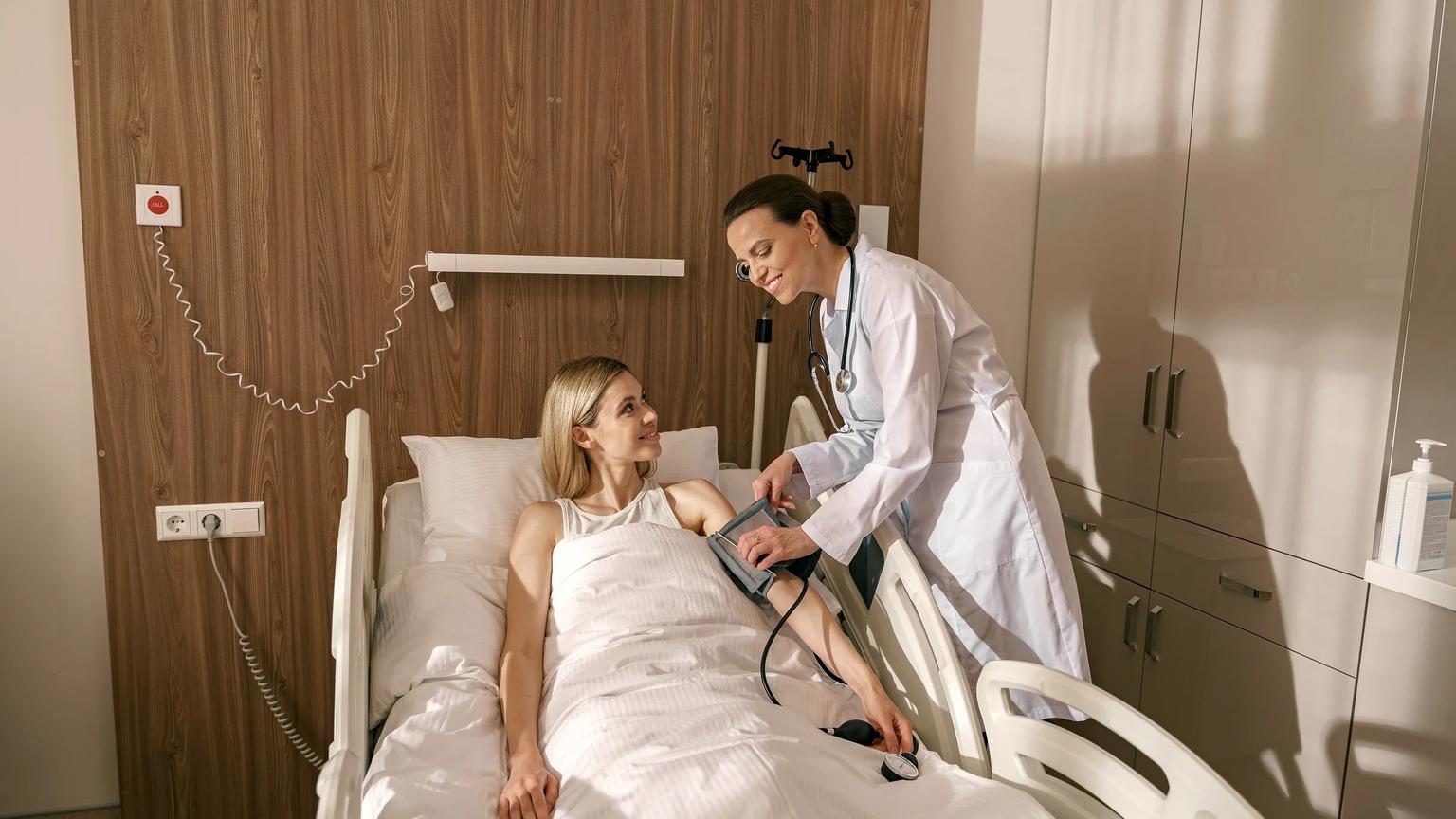
Inpatient corridor of a university teaching hospital
Routes
Observership 1–4 weeks · Fellowship 12–24 months
Format
Observation only — no patient contact
Language
English, with official proof of level
Location
University teaching hospital, Istanbul
Admission
Rolling — apply 3–6 months ahead
Certificate
Attendance (observership) · completion (fellowship)

Which route is right for you?

Choose the route that matches your stage. Both are delivered in English at the same host hospital and both are applied for through one online application.

Clinical Observership

Duration
1, 2 or 4 weeks (extension possible on request)
Who it is for
Medical students in clinical years and graduate physicians from outside Turkey
Format
Full-time, strictly observational — outpatient clinics, operating theatre, ward rounds, case discussions
Certificate
Certificate of attendance issued by the host hospital and signed by its Medical Director
Start
Rotations typically begin on a Monday; dates are agreed individually
  • Follow the complete patient pathway: pre-operative assessment, theatre, post-operative care
  • Attend departmental case discussions and multidisciplinary meetings
  • One department for the whole placement, agreed before arrival
  • Working hours follow the department, usually 08:00–18:00 on weekdays

Clinical Fellowship

Duration
12 to 24 months, agreed with the host department
Who it is for
Recognised specialists and family physicians seeking advanced exposure beyond standard specialty training
Format
Extended observational attachment to one department: daily practice, service structure and specific techniques
Certificate
Certificate on completion issued under the accreditation of the affiliated university school of medicine
Start
Start date planned around the date you request and the department's capacity
  • Longitudinal exposure to a department's case mix across a full clinical cycle
  • Structured observation of advanced techniques and service organisation
  • Eligibility requires a recognised specialist qualification and proof of English
  • Fee and terms confirmed in writing after the host department's review

Choose your specialty

Each specialty has its own page describing what an observer or fellow sees in that department, who typically applies, and the questions candidates ask most.

Ear, Nose and Throat (Otorhinolaryngology)

otology, rhinology, laryngology and head and neck surgery

View specialty

Gastroenterology and Hepatology

endoscopy, inflammatory bowel disease and hepatology

View specialty

General Surgery

laparoscopic, colorectal, hepatopancreatobiliary and breast surgery

View specialty

Gynaecological Surgery

laparoscopy, hysteroscopy, urogynaecology and gynaecological oncology

View specialty

Neurosurgery

cranial, neurovascular, functional and paediatric neurosurgery

View specialty

Organ Transplantation

liver and kidney transplantation, from evaluation to follow-up

View specialty

Orthopaedics and Traumatology

arthroplasty, arthroscopy, trauma and paediatric orthopaedics

View specialty

Plastic, Reconstructive and Aesthetic Surgery

reconstructive microsurgery, hand surgery and aesthetic surgery

View specialty

Spine Surgery

degenerative, deformity, minimally invasive and tumour spine surgery

View specialty

Thoracic Surgery

video-assisted and robotic lung surgery, mediastinal and airway surgery

View specialty

Thyroid and Endocrine Surgery

thyroidectomy, parathyroid surgery and neck dissection

View specialty

Urology

endourology, uro-oncology, robotic surgery and andrology

View specialty

Anaesthesiology and Pain Medicine (Algology)

theatre anaesthesia, intensive care and pain medicine

View specialty

Pulmonology (Respiratory Medicine)

bronchoscopy, lung function, sleep medicine and respiratory intensive care

View specialty

Paediatric Surgery

neonatal surgery, paediatric general surgery, paediatric urology overlap and day-case lists

View specialty

Paediatrics (Child Health)

general paediatrics, neonatology and the paediatric subspecialty clinics

View specialty

Cosmetic Dermatology

injectables, laser and energy-based devices, chemical peels and dermatoscopy

View specialty

Undersea and Hyperbaric Medicine

hyperbaric oxygen therapy, diving medicine and problem-wound care

View specialty

IVF and Reproductive Medicine

ovarian stimulation, oocyte retrieval, embryo transfer, andrology and the embryology laboratory

View specialty

Medical Genetics and Genetic Diagnosis

genetic counselling, prenatal and preimplantation diagnosis, dysmorphology and the diagnostic laboratory

View specialty

Nursing Observership

ward, intensive care, theatre and infection-control nursing practice

View specialty

English is the working language — and you will be asked to prove it

The programme is delivered exclusively in English. Clinical teaching, case discussions and all coordination take place in English, so fluent spoken and written English is a condition of admission for both routes.

Every applicant is required to evidence their level with an official document. A placement may be ended early by the host department if language ability proves insufficient for safe participation.

Accepted evidence

  • A recognised English-language certificate (IELTS, TOEFL, OET, Cambridge or equivalent), ideally at CEFR B2 or above
  • An official document confirming a degree taught and examined in English
  • Other official proof issued by a recognised institution, assessed case by case

This page is available in French, Russian and Arabic for information only. The placement itself, the application documents and all correspondence with the host hospital are in English.

Who is eligible

Clinical Observership

  • Medical student in the clinical years, or a graduate physician, from outside Turkey
  • A specific interest in the chosen department, explained in a short statement of objectives
  • Fluent spoken and written English, with official evidence
  • A reference from a dean, head of department or supervising physician at your own institution
  • Ability to fund the placement, or a sponsor's statement

Clinical Fellowship

  • A recognised specialist qualification, or registration as a family physician
  • A medical degree with an English translation where the original is in another language
  • Official proof of English proficiency
  • Academic transcripts and evidence of the examinations passed on your training route
  • A clear objective for the fellowship period, stated in your application

Documents you will be asked for

You upload your documents in step 4 of the application on this page — one file per item, saved as you go, so you can return with your personal link. Everything submitted to the host hospital must be in English; documents in another language are not accepted.

Clinical Observership

  • Passport identity page
  • Curriculum vitae in English
  • Medical school diploma, or student certificate and transcript for students
  • Reference letter from a medical supervisor at your own institution
  • Statement of your primary goals and objectives for the placement
  • Statement of funding — self-funded or sponsored

Additional for the fellowship route

  • Copy of your specialist certification
  • Academic transcripts
  • Proof of English proficiency
  • Evidence of examinations passed

How does the application work?

  1. 01

    Apply on this page

    Start with your personal details; we email you a personal link. Then add your education, the route, the specialty, your preferred duration and start window, and upload your documents — in five short steps, at your own pace.

  2. 02

    Eligibility screen by ATDERA

    Once your programme choice is in, our coordination team reviews your details against the route criteria and replies, typically within two working days, with anything still missing from your file.

  3. 03

    Host-department review

    Your complete file is submitted to the host hospital. The department confirms whether it can accept you, in which dates, and communicates the fee for the placement.

  4. 04

    Payment

    Once the placement is confirmed you pay the programme fee. Cancellation terms are set out in writing with the fee quotation; a visa refusal does not alter them, so apply early.

  5. 05

    Letter of acceptance and visa

    The letter of acceptance is issued after payment and supports your visa application. Obtaining the visa is your responsibility; host staff can advise on the documentation.

  6. 06

    Arrival and orientation

    Your placement begins with an orientation on the first day: access card, scrubs, locker and an introduction to the department's schedule.

Apply three to six months ahead

Departments accept only one or two observers at a time and files are reviewed in order. Submitting your application three to six months before your intended start date makes it far more likely that you get the dates you want.

What the placement covers

Typically covered by the programme fee

  • The clinical rotation in the agreed department
  • Scrubs for the hospital environment
  • A locker and a visitor access card
  • Meals at the hospital's staff canteen on placement days
  • The certificate of attendance
  • Applicable VAT

Arranged and paid separately

  • International travel and the visa
  • Accommodation in Istanbul — host staff can suggest options
  • Health and travel insurance for the placement period
  • Local transport and personal expenses

Programme fee

Fees are not published on this page. The fee for your route and duration is confirmed in writing after the eligibility review, before any travel commitment is made, and payment is requested only once the placement is confirmed.

A university teaching and research hospital in Istanbul

The placement takes place at a university-affiliated teaching and research hospital on a health-sciences campus in Istanbul, with a full surgical, intensive-care and outpatient infrastructure and an on-campus simulation and training centre. Clinical services are organised around a patient-centred, multidisciplinary model, and departments hold regular case conferences that observers attend.

ATDERA does not name the host hospital on this page. The hospital's identity, its department pages and the named supervising faculty are shared with you as soon as your eligibility screen is complete, together with the host-hospital application form.

ATDERA Global Limited is a UK-registered clinical education and coordination company. It screens applications, prepares the file for the host department, and coordinates dates and logistics. Admission decisions rest with the host hospital; ATDERA is not a hospital and does not provide clinical care.

The host hospital

  • University-affiliated teaching and research hospital
  • Single-patient inpatient rooms and dedicated intensive-care units
  • Multiple operating theatres with a daily elective and emergency schedule
  • On-campus simulation and training centre
  • Clinical services in Turkish and English; observer teaching in English

Observation, not practice

Both routes are strictly observational. Observers and fellows do not come into physical contact with patients, do not examine or treat them, and do not perform or assist in procedures, regardless of their qualifications at home. This is a governance and patient-consent requirement of the host hospital.

What you do is follow the complete clinical process — pre-operative assessment, the operating theatre, post-operative care, ward rounds and multidisciplinary discussion — alongside the department's team, in a high-volume setting.

The certificate you receive documents attendance. It does not by itself confer clinical competence, a specialist qualification or the right to practise in any jurisdiction.

Frequently asked questions

Is the observership hands-on?
No. Both the observership and the fellowship are strictly observational. You do not touch, examine or treat patients and you do not perform or assist in procedures. You observe the full clinical pathway — clinic, theatre, ward and case discussions — alongside the department's team.
Who can apply for the observership, and who for the fellowship?
The observership is open to medical students in their clinical years and to graduate physicians from outside Turkey. The fellowship is open only to recognised specialists and family physicians who hold a specialist qualification and can prove their English proficiency.
How long are the placements?
Observerships run for one, two or four weeks; an extension can be requested where the department agrees. Fellowships run for twelve to twenty-four months, agreed with the host department before you start.
Do I need to prove my English?
Yes. The programme is delivered exclusively in English and every applicant must evidence their level with an official document — a recognised certificate such as IELTS, TOEFL or OET, or official proof of an English-medium degree. A placement can be ended early if language ability proves insufficient.
When should I apply?
Three to six months before the start date you want. Departments take only one or two observers at a time, files are reviewed in order, and rotations usually begin on a Monday. Applications are accepted all year.
What certificate will I receive?
Observers receive a certificate of attendance issued by the host hospital and signed by its Medical Director. Fellows receive a certificate on completion under the accreditation of the affiliated university school of medicine. A faculty reference letter can be requested only for placements of two weeks or longer and is never guaranteed. Certificates document attendance; they do not confer a qualification or a licence to practise.
What does the fee cover, and when do I pay?
The fee typically covers the rotation itself, scrubs, a locker, a visitor access card, meals at the staff canteen and the certificate, including VAT. Travel, visa, accommodation and insurance are separate. The fee is confirmed in writing after the eligibility review and is paid once the placement is confirmed; the letter of acceptance is issued after payment.
Who arranges the visa and accommodation?
You do. The letter of acceptance supports your visa application and host staff can advise on the documentation, but obtaining the visa remains your responsibility. Accommodation is booked and paid by you; the host can suggest options near the campus.
Why is the hospital not named on this page?
ATDERA coordinates the programme for the host hospital and shares the hospital's identity, its department pages and the supervising faculty with each applicant as soon as the eligibility screen is complete. This keeps the public page factual and the host's name out of advertising.
Can ATDERA guarantee my acceptance?
No. ATDERA screens your file and prepares it for the department; the admission decision and the dates rest with the host hospital. A complete file, early submission and clear objectives make acceptance more likely, but nothing is guaranteed.

Apply for a placement

One online application for both routes: your details, programme choice and documents in five short steps, with a personal link to return at any time. ATDERA reviews the file and replies with next steps, typically within two working days.

  • Five short steps: your details, education, programme choice, documents and declaration.
  • A personal link by email, so you can leave and return where you stopped — for 60 days.
  • Documents are uploaded in step 4; you need nothing to hand to begin.

Already started? The application page picks up where you left off.

ATDERA Global Limited (Companies House No. 17173428, registered in England and Wales) coordinates this programme for a university teaching hospital in Istanbul. ATDERA is not a hospital and does not provide clinical care; admission decisions and certificates are the host hospital's.

Ready to apply?

One online application covers both routes and all twenty-one specialties — details, programme choice and documents in five short steps. ATDERA reviews the file and replies with next steps, typically within two working days.