Rolling admission · Istanbul · Delivered in English
Rhinoplasty Observership nasal surgery from consultation to follow-up, in Istanbul
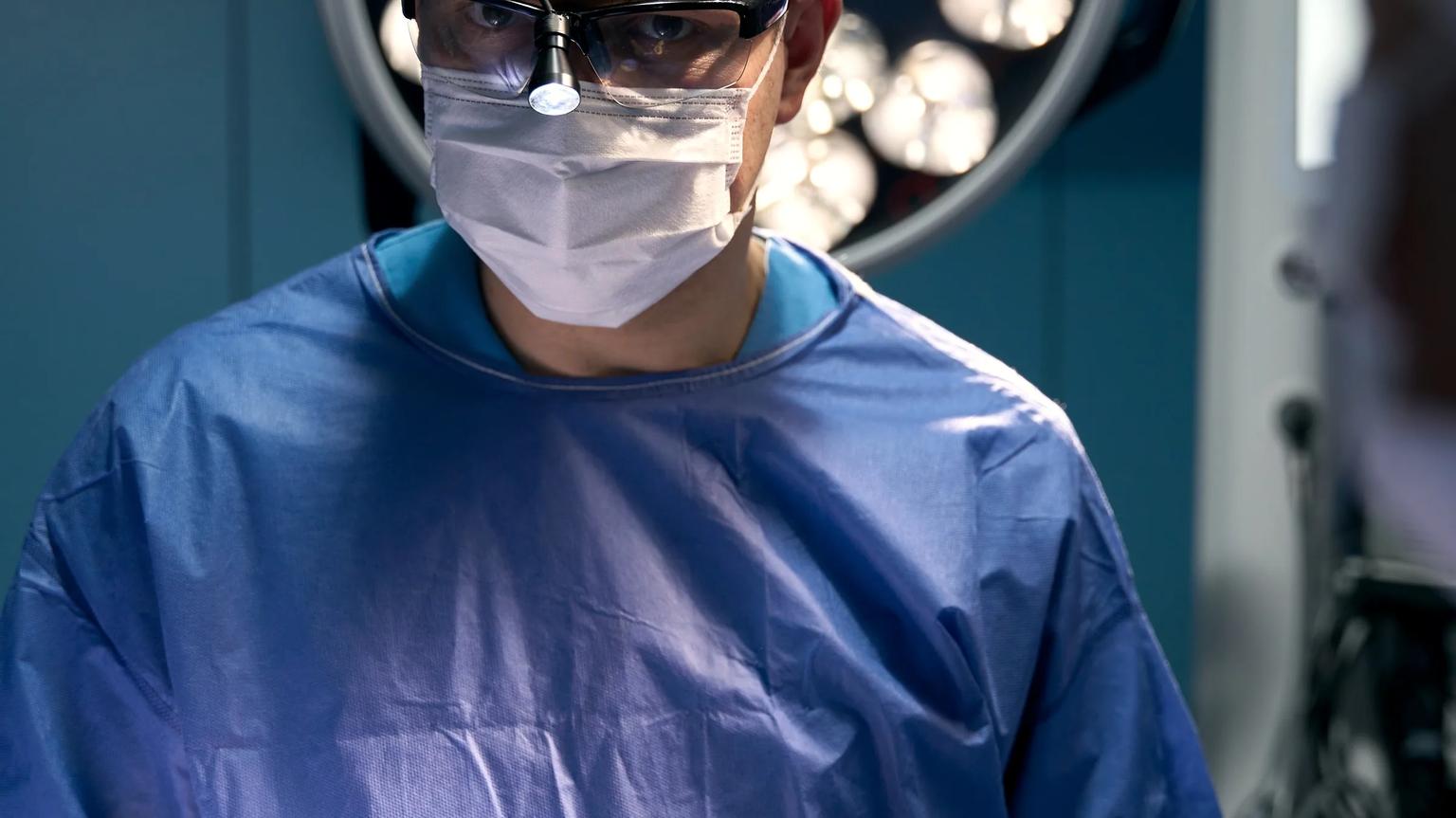
Follow rhinoplasty on the aesthetic lists of a university plastic surgery department: the consultation, the reasoning behind each plan, the operation and the review afterwards, as a non-sterile observer when cases fall in your dates.
What you see depends on the department's clinical calendar during your placement; the list below describes the department's usual scope, not a guaranteed programme.
Aesthetic consultations, where the patient agrees: the nasal analysis, the patient's goals and the discussion of what surgery can and cannot change
How the nasal airway (septum, valves, turbinates) is weighed alongside appearance in a rhinoplasty plan, as far as the consultation addresses breathing
Primary rhinoplasty on the department's aesthetic lists, followed from the theatre as a non-sterile observer when cases fall in your dates
Revision cases, if listed during your placement, with the planning discussion of altered anatomy and graft sources such as septal, ear or rib cartilage
A preservation rhinoplasty, or a particular open or closed approach, only where the department performs it during your dates — confirmed after review
Post-operative clinic visits where scheduled: splint removal, the course of swelling and how the result is judged against the original plan
How is a rhinoplasty plan agreed before the patient reaches theatre?
Rhinoplasty planning treats the nose as a single structure rather than a list of features. The surgeon assesses skin thickness, the bony and cartilaginous vaults, tip support and projection, and the relationship of the nose to the rest of the face, then sets that against what the patient hopes to change. Standardised photographs taken by the department's own staff anchor the analysis. A rhinoplasty assessment weighs breathing alongside appearance, because an untreated septal deviation or valve narrowing can undermine an aesthetic result, and reduction without regard to structural support can itself narrow the airway.
Revision cases change the conversation. Scar tissue, cartilage removed at an earlier operation and an altered blood supply narrow the options, and planning usually turns on where graft material will come from: the septum if enough remains, otherwise the ear or a rib. Following these discussions shows why revision surgery concentrates on restoring support and why expectations are explored at greater length. The choice between an open, closed or preservation approach depends on the deformity and on the operating surgeon's judgement, and the reasons behind it are a useful subject to raise with the team.
After the operation the work moves to the clinic. Early review covers splint removal and swelling, but rhinoplasty results mature over many months, particularly where the skin is thick, so later visits are where outcomes are judged against the plan. A short placement may show one part of that arc; a longer attachment shows more of it. Throughout, consultations are attended where the patient agrees, and observers keep anonymised written notes without photographing patients or copying images.
How this page differs
The parent plastic surgery page covers the department's full reconstructive and aesthetic scope; this page narrows it to rhinoplasty on the aesthetic lists, which the ENT route's published scope (ear, sinus, skull base, airway, head and neck) does not name. It is separate from the facelift and neck lift page, which concerns soft-tissue ageing, and from reconstructive microsurgery, which concerns free-tissue transfer.
Who applies, and which route fits?
Clinical Observership
Senior students and graduate physicians drawn to plastic surgery or ENT, and surgeons from either specialty, who want a short, close look at how rhinoplasty is assessed, planned and followed up in a university department.
Clinical Fellowship
Plastic surgeons, and otorhinolaryngologists where the host department judges the fit, who state rhinoplasty as their interest within a 12–24-month observational attachment to the plastic surgery department, which also spans its reconstructive work.
What an observer does not do
Both routes are strictly observational: observers attend theatre and clinic without patient contact, do not scrub or assist, and are not assessed on any procedure.
Rhinoplasty shares the aesthetic lists with body contouring and facial procedures, so the number of nasal cases in any week cannot be promised.
Revision and preservation cases, and any particular approach, depend on the patients listed during your dates; none can be reserved in advance.
Standardised photographs, morphing images and planning drawings belong to the patient record; observers do not take, copy or share them.
The certificate records attendance; it is not a rhinoplasty qualification and confers no procedural certification.
The two routes at a glance
The two routes side by side
Clinical Observership
Clinical Fellowship
Duration
1, 2 or 4 weeks (extension possible on request)
12 to 24 months, agreed with the host department
Who it is for
Medical students in clinical years and graduate physicians from outside Turkey
Recognised specialists and family physicians seeking advanced exposure beyond standard specialty training
Extended observational attachment to one department: daily practice, service structure and specific techniques
Certificate
Certificate of attendance issued by the host hospital and signed by its Medical Director
Certificate on completion issued under the accreditation of the affiliated university school of medicine
Start
Rotations typically begin on a Monday; dates are agreed individually
Start date planned around the date you request and the department's capacity
Before you apply
The programme is delivered in English and every applicant evidences their level with an official document.
Fees and terms are confirmed in writing after the eligibility review; they are not published on this page.
Apply three to six months ahead: departments accept only one or two observers at a time and files are reviewed in order.
State your focus in the objectives of your application. Allocation follows the department's lists during your dates.
What do candidates ask about Rhinoplasty?
Can I request exposure to revision rhinoplasty?
Yes. You can name revision rhinoplasty in your statement of objectives, and the department takes it into account when allocating you to its aesthetic lists where the schedule allows. Revision cases are listed as patients present rather than to a teaching programme, so whether one falls in your dates cannot be promised, and a longer placement improves the odds. When a revision case is listed, you can follow the consultation where the patient agrees, the planning discussion about grafts and altered anatomy, the operation from a non-sterile position and the early review.
How does an observership differ from a rhinoplasty fellowship?
The host programme has two routes, and neither is a rhinoplasty fellowship in the sense of a dedicated surgical post. The Clinical Observership lasts one, two or four weeks and suits students in their clinical years and graduate physicians. The Clinical Fellowship lasts 12 to 24 months, is open to recognised specialists, and is an extended observational attachment to the plastic surgery department in which rhinoplasty is your stated interest rather than your whole timetable. Both routes are observation without a role in surgery or patient care, and neither confers a subspecialty qualification.
Can ENT surgeons apply for a rhinoplasty placement?
Yes. Otorhinolaryngologists are eligible for either route: the observership as graduate physicians from outside Turkey, the fellowship as recognised specialists. The placement itself sits in the plastic surgery department, where rhinoplasty appears on the aesthetic lists, and the host department reviews each applicant's background before deciding on fit and dates. If your main interest is sinus or skull-base surgery, the ENT route matches that work more closely, and the coordination team can advise which to choose.
What should I revise before a rhinoplasty placement?
Nasal anatomy is the foundation: the bony and cartilaginous vaults, the septum, the lower lateral cartilages and the mechanisms that support the tip, together with the internal and external nasal valves. The language of nasal analysis, including tip projection and rotation and the nasofrontal and nasolabial angles, comes up in almost every consultation. Reading on common revision deformities and the principles of cartilage grafting will make planning discussions easier to follow. Bring a notebook, since observers keep anonymised written notes and do not photograph patients or images.
Apply for an observership with Rhinoplasty as your focus
One online application for both routes. State Rhinoplasty as your focus in your objectives; ATDERA reviews the file and prepares it for the Plastic Surgery department, then replies with next steps, typically within two working days.
Five short steps: your details, education, programme choice, documents and declaration.
A personal link by email, so you can leave and return where you stopped — for 60 days.
Documents are uploaded in step 4; you need nothing to hand to begin.
ATDERA Global Limited (Companies House No. 17173428, registered in England and Wales) coordinates this programme for a university teaching hospital in Istanbul. ATDERA is not a hospital and does not provide clinical care; admission decisions and certificates are the host hospital's.
Ready to apply?
One online application covers both routes and all twenty-one specialties — details, programme choice and documents in five short steps. ATDERA reviews the file and replies with next steps, typically within two working days.