Rolling admission · Istanbul · Delivered in English
Otology & Cochlear Implant Observership ear surgery, implant candidacy and the audiology laboratory in Istanbul
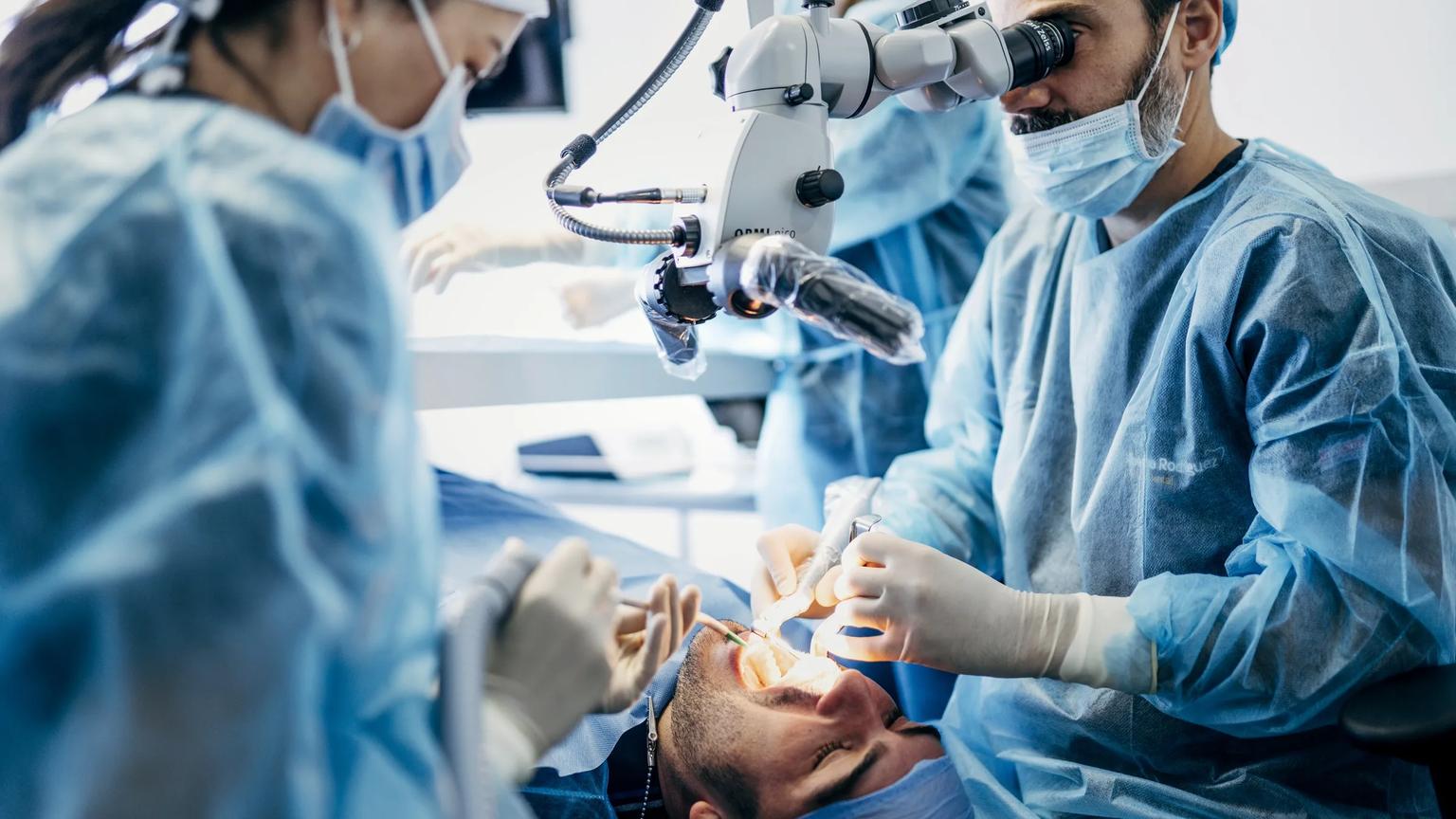
Follow how a university ear, nose and throat department assesses hearing loss and chronic ear disease, selects candidates for implantation and operates under the microscope, with no operative role, on the lists scheduled during your dates.
What can an observer follow in Otology & Cochlear Implant?
What you see depends on the department's clinical calendar during your placement; the list below describes the department's usual scope, not a guaranteed programme.
Otology and neurotology lists: tympanoplasty and mastoid surgery, where scheduled, followed on the microscope monitor
Cochlear implantation where scheduled, with the candidacy assessment that precedes it
The otology clinic: examination of the ear under the microscope and the reading of temporal bone imaging
Audiology alongside the clinic: how hearing tests are performed and how the results change the plan
Vestibular testing and the assessment of the patient with dizziness
Chronic ear disease decisions: when to treat medically, when to operate and how the operation is chosen
Follow-up after ear surgery and after implantation: wound review, hearing results and the handover to the audiology team
When is ear surgery or an implant the right step, and who shapes the decision?
In chronic ear disease the first question is what the operation is for. A dry perforation of the eardrum may be repaired to stop recurrent infection and, in some patients, to improve hearing; cholesteatoma is generally treated by surgery because it can erode the structures around it. The extent of disease, the anatomy of the mastoid, the state of the other ear and how reliably the patient can attend follow-up all influence the choice of technique. Hearing reconstruction may be done at the same operation or planned as a second stage.
Cochlear implantation is decided by a team. Candidates generally have severe to profound sensorineural hearing loss and gain limited benefit from well-fitted hearing aids. The otologist, the audiologist and, for children, the specialists who support speech and language development assess hearing, imaging of the inner ear and hearing nerve, general health and expectations. In children born deaf, earlier implantation is associated with better language outcomes, so timing is part of the decision. Criteria and funding differ between countries, which visiting physicians often find instructive.
In theatre the work is done through an operating microscope, and the facial nerve is identified and protected throughout; many teams use nerve monitoring for this. For an implant, the electrode is placed in the cochlea and the device is tested before the wound is closed. Surgery is only the beginning: the device is commonly switched on some weeks later, and hearing is built through programming and rehabilitation. An observer who follows a patient from the audiology laboratory to the operating microscope sees how these decisions connect.
How this page differs
This page covers ear surgery and hearing implantation within the ear, nose and throat department. Head and neck oncology has its own focus page. Rhinology, laryngology and paediatric ear, nose and throat practice are described on the parent department page.
Who applies, and which route fits?
Clinical Observership
Trainees and graduate physicians in otorhinolaryngology who want to see how hearing assessment, case selection and ear surgery fit together; clinical-year students are eligible but usually gain more from the wider department.
Clinical Fellowship
Otorhinolaryngologists with a specialist qualification who state otology and implant surgery as their interest within the department; the department decides allocation, and ear lists are followed alongside its other clinics and lists.
What an observer does not do
Both routes are strictly observational: observers attend theatre and clinic without patient contact, do not scrub or assist, and are not assessed on any procedure.
Strictly observational: no handling of the microscope, drill, implant or audiology equipment, and no temporal bone drilling or laboratory session.
The operative field is small; you follow on the monitor, and your view depends on the camera and the stage of the operation.
Implant surgery is scheduled when candidates and devices are ready; no number or type of case, including cochlear implantation, can be promised.
No procedural certification, logbook entries or competence sign-off: the certificate records attendance or completion, not surgical skill.
The two routes at a glance
The two routes side by side
Clinical Observership
Clinical Fellowship
Duration
1, 2 or 4 weeks (extension possible on request)
12 to 24 months, agreed with the host department
Who it is for
Medical students in clinical years and graduate physicians from outside Turkey
Recognised specialists and family physicians seeking advanced exposure beyond standard specialty training
Extended observational attachment to one department: daily practice, service structure and specific techniques
Certificate
Certificate of attendance issued by the host hospital and signed by its Medical Director
Certificate on completion issued under the accreditation of the affiliated university school of medicine
Start
Rotations typically begin on a Monday; dates are agreed individually
Start date planned around the date you request and the department's capacity
Before you apply
The programme is delivered in English and every applicant evidences their level with an official document.
Fees and terms are confirmed in writing after the eligibility review; they are not published on this page.
Apply three to six months ahead: departments accept only one or two observers at a time and files are reviewed in order.
State your focus in the objectives of your application. Allocation follows the department's lists during your dates.
What do candidates ask about Otology & Cochlear Implant?
Does the observership include temporal bone dissection or hands-on drilling?
No. Both routes are strictly observational, and neither includes a temporal bone laboratory, drilling practice or any simulator session. Observers follow ear surgery on the microscope monitor and hear the reasoning behind each step. Hands-on dissection courses are a different kind of programme.
Will I see cochlear implant surgery during a short placement?
It cannot be promised. The department's usual scope includes cochlear implantation where scheduled, but implant operations depend on when candidates complete their assessment and devices are available. Name implantation in your objectives so that the department can say whether it is likely during your dates. A longer placement widens the range of cases you may see, but no operation can be promised.
Can audiologists or speech and language therapists apply?
The published routes are written for medical students in their clinical years, graduate physicians and recognised specialists. If you are an audiologist, a speech and language therapist or another professional without a medical degree, write to hello@atdera.com before applying. The coordination team will ask the host department whether a placement is possible in your case; do not assume eligibility from this page.
Are children's cases included?
The department's published scope includes paediatric ear, nose and throat practice. Whether children's ear surgery or implantation is listed during your dates depends on the calendar, and access to children's lists follows the hospital's own rules for visitors.
What background helps me follow ear surgery?
The programme does not publish a minimum level of experience. In practice the operations are easier to follow if you know the anatomy of the temporal bone, can read an audiogram and understand the difference between conductive and sensorineural hearing loss. Without that grounding, the wider department may be the better starting point.
Apply for an observership with Otology & Cochlear Implant as your focus
One online application for both routes. State Otology & Cochlear Implant as your focus in your objectives; ATDERA reviews the file and prepares it for the ENT department, then replies with next steps, typically within two working days.
Five short steps: your details, education, programme choice, documents and declaration.
A personal link by email, so you can leave and return where you stopped — for 60 days.
Documents are uploaded in step 4; you need nothing to hand to begin.
ATDERA Global Limited (Companies House No. 17173428, registered in England and Wales) coordinates this programme for a university teaching hospital in Istanbul. ATDERA is not a hospital and does not provide clinical care; admission decisions and certificates are the host hospital's.
Ready to apply?
One online application covers both routes and all twenty-one specialties — details, programme choice and documents in five short steps. ATDERA reviews the file and replies with next steps, typically within two working days.