Rolling admission · Istanbul · Delivered in English
Neurovascular Surgery Observership neurovascular case selection, microsurgery and the joint endovascular discussion in Istanbul
Follow how a university neurosurgery department reviews neurovascular cases with interventional radiology, chooses between observation, endovascular treatment and open microsurgery, and cares for patients in neuro-intensive care, with no operative role, on the lists scheduled during your dates.
What can an observer follow in Neurovascular Surgery?
What you see depends on the department's clinical calendar during your placement; the list below describes the department's usual scope, not a guaranteed programme.
The neurovascular and endovascular case discussion with interventional radiology: how each case is presented and how the treatment route is agreed
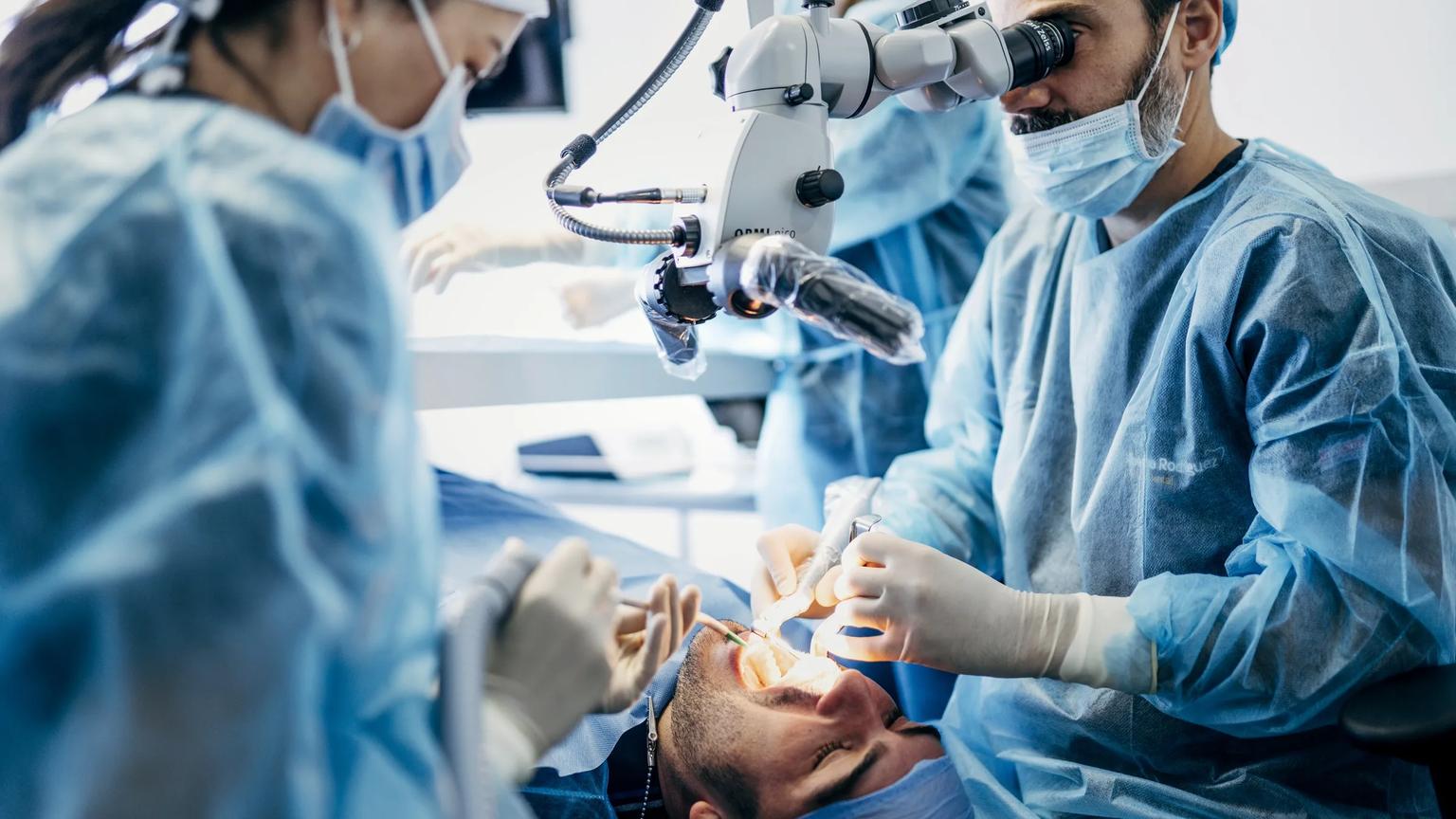
Neurovascular surgery on the neurosurgical lists, where scheduled, followed on the microscope monitor
Imaging review of neurovascular cases: how CT, MR and angiographic studies are read and how the anatomy shapes the plan
Theatre set-up for cranial microsurgery: positioning, the operating microscope, neuronavigation and intraoperative monitoring
The neuro-intensive care round: neurological observation and the management of the first days after haemorrhage or surgery
The neurosurgery outpatient clinic: counselling after an incidental finding, follow-up imaging and the decision to observe
The wider cranial service around these cases: tumour, trauma and the department's multidisciplinary meetings
How is a neurovascular case decided, and who shapes the decision?
Many neurovascular problems come to light before they cause harm. An unruptured aneurysm found on a scan raises a question of balance: the risk that it will bleed against the risk of treating it. Size, site and shape, the patient's age and health, a personal or family history of haemorrhage and the patient's own view all enter that judgement, and for many small aneurysms follow-up imaging is the agreed plan. When treatment is chosen, the options are an endovascular procedure through the blood vessels or open microsurgery, and the anatomy often favours one over the other.
After a haemorrhage the priorities change. The source is identified quickly, the aneurysm is secured early to prevent rebleeding, and the patient is cared for in neuro-intensive care, where the team watches for delayed complications such as narrowing of the arteries and a build-up of fluid in the brain. Vascular malformations raise a different set of options, which may include observation, microsurgery, focused radiation or embolisation, used alone or in combination according to size, position and the pattern of blood flow.
No single specialty owns these decisions. In this department, endovascular cases are discussed with interventional radiology, and the recommendation for each patient comes out of that shared review. When open surgery is chosen it is carried out in the neurosurgical theatre with the operating microscope, navigation and monitoring, and followed by close neurological observation. An observer who attends the case discussion, the operation and the intensive care round sees how these decisions connect.
How this page differs
This page covers neurovascular practice within the neurosurgery department. Functional neurosurgery and deep-brain stimulation have their own focus page, and spinal work is covered on the spine surgery pages. The department's published scope describes endovascular case discussion with interventional radiology; attendance in the angiography suite is not part of it.
Who applies, and which route fits?
Clinical Observership
Neurosurgery trainees and graduate physicians who want to see how neurovascular cases are selected and how two specialties share one decision; clinical-year students are eligible but usually gain more from the wider department.
Clinical Fellowship
Neurosurgeons with a specialist qualification who state neurovascular practice as their interest within the neurosurgery department; the department decides allocation, and neurovascular cases are followed alongside its tumour, trauma and spinal work.
What an observer does not do
Both routes are strictly observational: observers attend theatre and clinic without patient contact, do not scrub or assist, and are not assessed on any procedure.
Strictly observational: no scrubbing, assisting or handling of the microscope, and no part in angiography or endovascular procedures.
The operative field is seen on the monitor, and in emergencies the team may limit who is present in theatre.
Neurovascular operations are not daily events; no number or type of case, including aneurysm surgery, can be promised.
No procedural certification, logbook entries or competence sign-off: the certificate records attendance or completion, not microsurgical or endovascular skill.
The two routes at a glance
The two routes side by side
Clinical Observership
Clinical Fellowship
Duration
1, 2 or 4 weeks (extension possible on request)
12 to 24 months, agreed with the host department
Who it is for
Medical students in clinical years and graduate physicians from outside Turkey
Recognised specialists and family physicians seeking advanced exposure beyond standard specialty training
Extended observational attachment to one department: daily practice, service structure and specific techniques
Certificate
Certificate of attendance issued by the host hospital and signed by its Medical Director
Certificate on completion issued under the accreditation of the affiliated university school of medicine
Start
Rotations typically begin on a Monday; dates are agreed individually
Start date planned around the date you request and the department's capacity
Before you apply
The programme is delivered in English and every applicant evidences their level with an official document.
Fees and terms are confirmed in writing after the eligibility review; they are not published on this page.
Apply three to six months ahead: departments accept only one or two observers at a time and files are reviewed in order.
State your focus in the objectives of your application. Allocation follows the department's lists during your dates.
What do candidates ask about Neurovascular Surgery?
Is this a neurointervention or endovascular fellowship?
No. The placement is with the neurosurgery department. Its published scope includes neurovascular surgery and the discussion of endovascular cases with interventional radiology. It does not include a role in the angiography suite, presence there is not part of the placement, and neither route provides procedural training. If endovascular technique is your main interest, ask before applying what can be followed during your dates.
How often are neurovascular operations scheduled?
They are not daily events, and their timing often depends on emergencies, so no number or type of case can be promised. On other days the department's work includes cranial tumour surgery, trauma, spinal lists shared with the spine unit, the neuro-intensive care round and the outpatient clinic, all of which an observer follows.
Will I attend emergency cases outside working hours?
Working hours follow the department, usually 08:00 to 18:00 on weekdays. Attendance outside those hours is at the department's discretion and should not be expected.
Can neurologists or radiologists apply?
The Clinical Observership is open to medical students in their clinical years and to graduate physicians from outside Turkey, whatever their specialty. The Clinical Fellowship requires a recognised specialist qualification, and the fellowship focus published for this department is written for neurosurgeons. Other specialists should describe their background plainly; the host department decides whether the attachment fits.
What background helps me follow these cases?
The programme does not publish a minimum level of experience. In practice the case discussion is easier to follow if you know the arterial anatomy of the brain, the outline of how haemorrhage is graded and the basics of reading vascular imaging. Without that grounding, the wider neurosurgery department may be the better starting point.
Apply for an observership with Neurovascular Surgery as your focus
One online application for both routes. State Neurovascular Surgery as your focus in your objectives; ATDERA reviews the file and prepares it for the Neurosurgery department, then replies with next steps, typically within two working days.
Five short steps: your details, education, programme choice, documents and declaration.
A personal link by email, so you can leave and return where you stopped — for 60 days.
Documents are uploaded in step 4; you need nothing to hand to begin.
ATDERA Global Limited (Companies House No. 17173428, registered in England and Wales) coordinates this programme for a university teaching hospital in Istanbul. ATDERA is not a hospital and does not provide clinical care; admission decisions and certificates are the host hospital's.
Ready to apply?
One online application covers both routes and all twenty-one specialties — details, programme choice and documents in five short steps. ATDERA reviews the file and replies with next steps, typically within two working days.