

Track lead
Dt. Mahmut Boran — Implantologist & Maxillofacial Surgeon
Dental observership · Turkey · 1, 2 or 3 weeks
Observation for qualified dentists of how bone deficiency is assessed on CBCT, when guided bone regeneration or sinus floor elevation is indicated, and how staging shapes the implant timeline.
Dt. Mahmut Boran — Implantologist & Maxillofacial Surgeon
Bone deficiency is a frequent reason an implant plan changes. After tooth loss the ridge resorbs, and in the posterior maxilla sinus pneumatisation can leave little bone beneath the sinus floor. CBCT shows whether the deficiency is horizontal, vertical or both, how far the defect is contained by surrounding bone and, for the sinus, the floor's contour, any septa, membrane thickening or signs of sinus disease that need assessment before surgery. The initial planning question is whether augmentation is needed at all, or whether a shorter or narrower implant, a different position or a different prosthetic design would avoid it.
Where augmentation is indicated, the next decision is timing. If the implant can achieve primary stability in the correct prosthetic position, grafting may be done at the same visit; if not, the site is grafted and the implant placed after healing. Guided bone regeneration combines a graft material with a barrier membrane that holds space while bone forms, and larger or vertical defects are more demanding. For the sinus, a transcrestal approach suits sites with more residual bone, whereas a lateral window is generally used when residual height is limited. Each choice is discussed for its indication, its risks and the healing time it adds.
Staging is what sets this focus apart from an ordinary implant day. A grafted site usually needs several months before implant placement, and the implant needs further healing before restoration, so one patient's sequence can stretch over many months. Bone grafting and sinus-lift procedures appear on the implant track's list where indicated, not on a fixed schedule. A short placement may show one stage in one patient; records review then links it to the stages before and after, which is where much of the learning in augmentation lies.
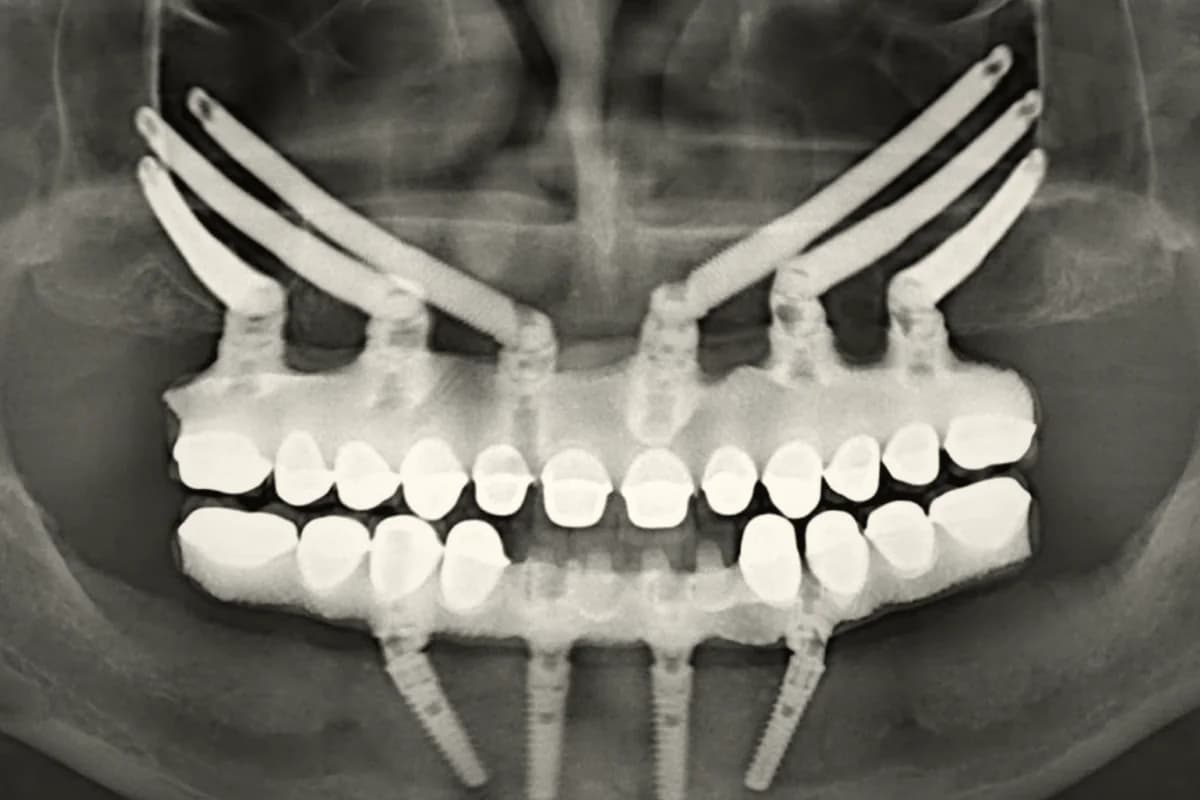
This page is limited to building bone for implants: guided bone regeneration, sinus lift and the staged pathway they create. Sites with adequate bone belong to the dental implant surgery page; zygomatic implants, used where conventional augmentation is contraindicated, are a conditional option on the full-arch page; the whole programme is on the dental observership page.
Qualified dentists who plan or place implants and meet bone deficiency in their own cases, and who want to understand when to graft, when to stage and when to refer.
Augmentation cases are scheduled within the implant track, which Dt. Mahmut Boran, implantologist and maxillofacial surgeon, leads. Because grafting appears on the list only where indicated, the longer options give more scheduling room: implants as the primary track over two weeks, or all three tracks over three, rather than the 1-week introduction.
The programme is observation-only by design: observers do not place implants, prepare teeth, fit prostheses or carry out any clinical intervention on patients, regardless of their home qualifications.
Tell us which focus and duration you are considering. ATDERA's coordination team reviews every enquiry individually and proposes a placement window aligned with the partner practice's clinical schedule.