

Dental observership · Turkey · 1, 2 or 3 weeks

Full-Arch Implant Observership four- and six-implant designs, commonly called All-on-4 and All-on-6

Chair-side observation for qualified dentists of full-arch planning, surgery and provisional prosthesis coordination, with immediate loading discussed case by case where it is indicated.
  • Qualified dentists
  • Observation only
  • 1, 2 or 3 weeks
  • Working clinical English
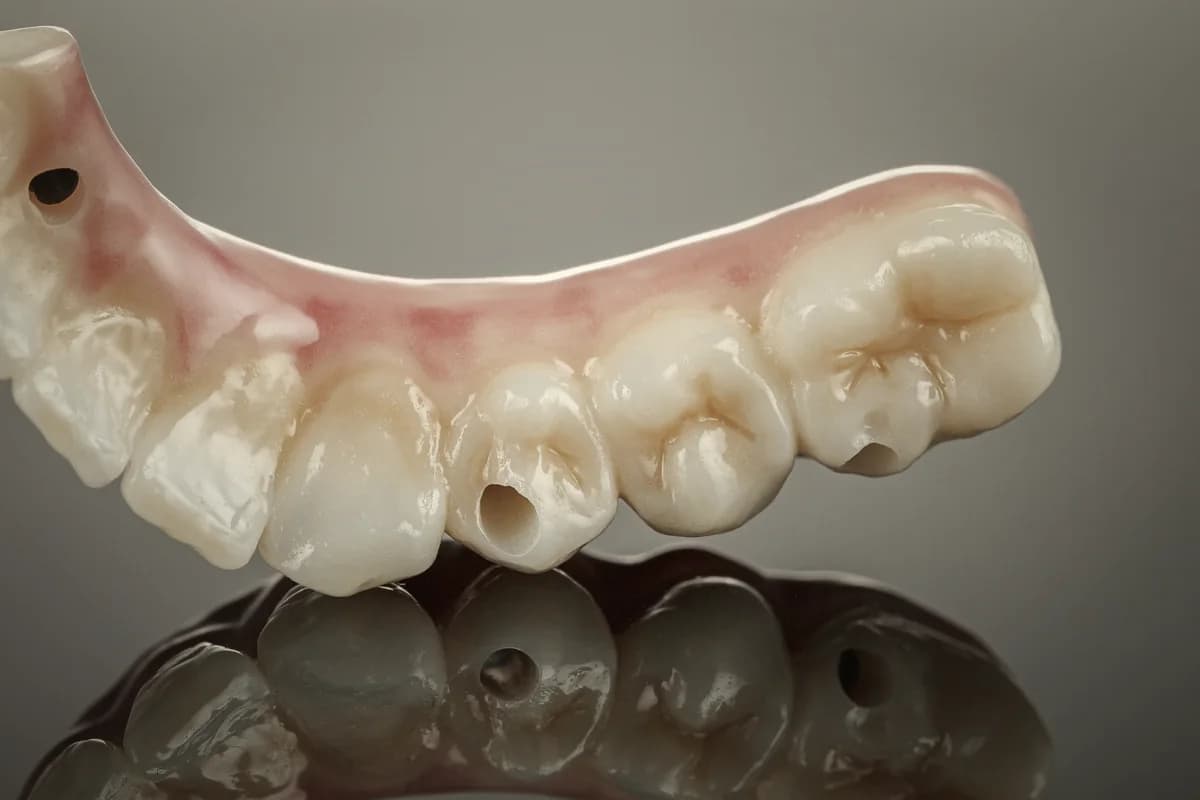
Full-arch implant-supported bridge
Duration
1, 2 or 3 weeks
Format
Chair-side observation only
Who
Qualified dentists (DDS, BDS or equivalent)
Setting
ATDERA Care Network partner practices, Turkey
Language
Working clinical English
Certificate
Attendance — issuer stated on the document

What can a dentist observe in Full-Arch Implant Rehabilitation?

  • Full-arch assessment: the remaining dentition, bone volume on CBCT, lip support, smile line and the vertical space the prosthesis needs.
  • The choice between four- and six-implant designs, commonly called All-on-4 and All-on-6, including tilted posterior implants that avoid the sinus or nerve.
  • Full-arch surgery observed chair-side where it is on the surgical list, with discussion of extraction, bone levelling and implant positioning decisions.
  • Primary stability and the immediate-loading decision: when a fixed provisional is fitted at or within days of surgery, and when loading is deferred.
  • Provisional prosthesis coordination between surgeon, restorative dentist and technician, observed where the fitting falls inside your placement.
  • Zygomatic implants as a conditional sub-topic, for the severely resorbed maxilla where conventional augmentation is contraindicated; observed if scheduled.
  • Staged care discussed through cases at different points: healing, the move from provisional to definitive prosthesis, hygiene access and maintenance.

Track lead

Dt. Mahmut Boran — Implantologist & Maxillofacial Surgeon

When is immediate full-arch loading appropriate, and when is it deferred?

Full-arch rehabilitation is usually considered for an edentulous arch or a failing dentition that cannot be maintained predictably. The planning question is not just how many implants the bone allows, but what the final prosthesis needs: lip support, the visibility of the junction between prosthesis and gum, vertical restorative space and the opposing arch. The four- and six-implant concepts commonly called All-on-4 and All-on-6 are variants of one idea. Tilting the posterior implants can avoid the maxillary sinus or the mental foramen and shorten the cantilever, while a six-implant design adds support and some redundancy where bone volume allows.

Immediate loading is a decision made on the day, not a promise made in advance. It depends on adequate primary stability across the implants, on splinting them with a rigid provisional, and on the patient's medical status, bone quality and parafunction. When those conditions are not met, the team may fit a removable provisional and load later. Where bone loss in the posterior maxilla is severe and conventional augmentation is contraindicated, zygomatic implants are one option discussed on the implant track; on this page they are a conditional sub-topic rather than a routine part of a placement.

The restorative sequence runs well beyond the surgical day. A fixed provisional is usually worn through several months of healing and integration before the definitive prosthesis is made, and maintenance and hygiene access shape the design from the outset. Observers therefore tend to follow different patients at different stages and connect them in case review, rather than one patient from extraction to definitive bridge. That longitudinal discussion, anchored at the planning workstation where records are available, is the core of this focus.

How this page differs

This page is about whole arches: planning a fixed full-arch prosthesis, the immediate-loading decision and provisional coordination, with zygomatic implants as a conditional option. Single-tooth cases and the general pathway sit on the dental implant surgery page, grafting and sinus lift on the bone augmentation page, and the whole programme on the dental observership page.

Who this focus suits

Qualified dentists with an implant or restorative interest who are weighing full-arch treatment for their own patients and want to understand planning, provisional coordination and the decision to load immediately.

Tracks and duration

Full-arch work sits in the implant track led by Dt. Mahmut Boran, implantologist and maxillofacial surgeon. A 2-week placement with implants as the primary track, or a 3-week cross-track placement, gives a longer window in which planning, surgery and a provisional fitting may overlap; a 1-week placement is an introduction.

What an observer does not do

The programme is observation-only by design: observers do not place implants, prepare teeth, fit prostheses or carry out any clinical intervention on patients, regardless of their home qualifications.

  • Observation-only: observers do not extract teeth, place implants, adjust prostheses or take part in any clinical step.
  • Full-arch days depend on the clinical list during your dates; a full-arch case, and a four- or six-implant design in particular, cannot be promised in advance.
  • A complete restorative cycle, from planning to definitive prosthesis, spans months and is not expected within one placement.
  • Zygomatic implants are reserved for selected cases; they are discussed where relevant and observed if one is scheduled.

Before you enquire

  • Open to qualified dentists holding a DDS, BDS or equivalent; final-year dental students and dental therapists are not currently eligible.
  • Working clinical English is required; observers self-assess to CEFR B2 or above and language readiness is confirmed at review.
  • Enquiries go through the contact form. ATDERA reviews each one individually and asks for a current CV and two professional references.
  • Specific case types are aligned with the partner clinician's list at scheduling, not at application; four to eight weeks from application to a confirmed placement is typical.

What do dentists ask about Full-Arch Implant Rehabilitation?

Can I observe All-on-4 and All-on-6 cases?
Both appear on the implant track's case list as immediate-loading full-arch surgery, and either can be requested when you enquire. Which design a patient receives is a clinical decision made from the CBCT, the prosthetic plan and the bone found at surgery, so the scheduling team can align your dates with a full-arch day but cannot promise a particular variant. Availability is confirmed at scheduling, against two- to three-week rolling clinical lists. The names are used descriptively for four- and six-implant concepts, and no manufacturer-specific protocol certificate is issued.
Will the entire restorative sequence fit within my placement?
Usually not. A full-arch case runs from records and planning through extractions and surgery to a provisional prosthesis, then several months of healing and integration before the definitive prosthesis and maintenance reviews. A 1-, 2- or 3-week placement captures part of that. Longer placements give more chance that planning, surgery and a provisional fitting fall within your dates, and case review links patients at different stages so the whole sequence can be followed in discussion. Provisional fitting is observed where it falls inside your window.
Are zygomatic implants part of a full-arch placement?
Conditionally. On the implant track, zygomatic implants are considered for severe maxillary resorption where conventional augmentation is contraindicated. They are discussed when a case raises that question, and a zygomatic case can be requested, but it is observed if one is scheduled during your dates and not otherwise. This page treats them as one branch of full-arch decision-making rather than a reason to choose the placement; dentists whose main interest is building bone for implants should read the bone augmentation and sinus lift page.
Which records are discussed when a full-arch case is planned?
Discussion starts from the CBCT and the prosthetic plan together: bone volume and anatomy, the planned tooth position, lip support, smile line and the space the prosthesis will occupy. Photographs, scans and the opposing arch are reviewed where they form part of the record. Where CBCT or digital records are available, the case discussion is anchored at the planning workstation, and observers can ask why a four- or six-implant design, or a deferred loading plan, was chosen for that patient.
How is the provisional prosthesis coordinated with the surgery?
The provisional is planned before surgery, and implant-prosthetic handover and provisional prosthesis fitting are on the implant track's case list. Where the fitting falls inside your placement, observers can follow how fit, occlusion and access for cleaning are checked, and how the surgeon, restorative dentist and technician share the patient on the day. Where it does not, the sequence is covered in case review using the records, so the coordination can still be discussed in detail.

Interested in this focus?

Tell us which focus and duration you are considering. ATDERA's coordination team reviews every enquiry individually and proposes a placement window aligned with the partner practice's clinical schedule.