Rolling admission · Istanbul · Delivered in English
Gynaecological Oncology Observership the tumour board, the cancer list and the follow-up pathway
Sit in on the weekly tumour board and follow women with gynaecological cancer through theatre, the ward and follow-up at a university teaching and research hospital in Istanbul, where cases fall in your dates.
What can an observer follow in Gynaecological Oncology?
What you see depends on the department's clinical calendar during your placement; the list below describes the department's usual scope, not a guaranteed programme.
The weekly gynaecological oncology tumour board, where imaging, histology and staging are reviewed and a treatment plan is agreed for each patient.
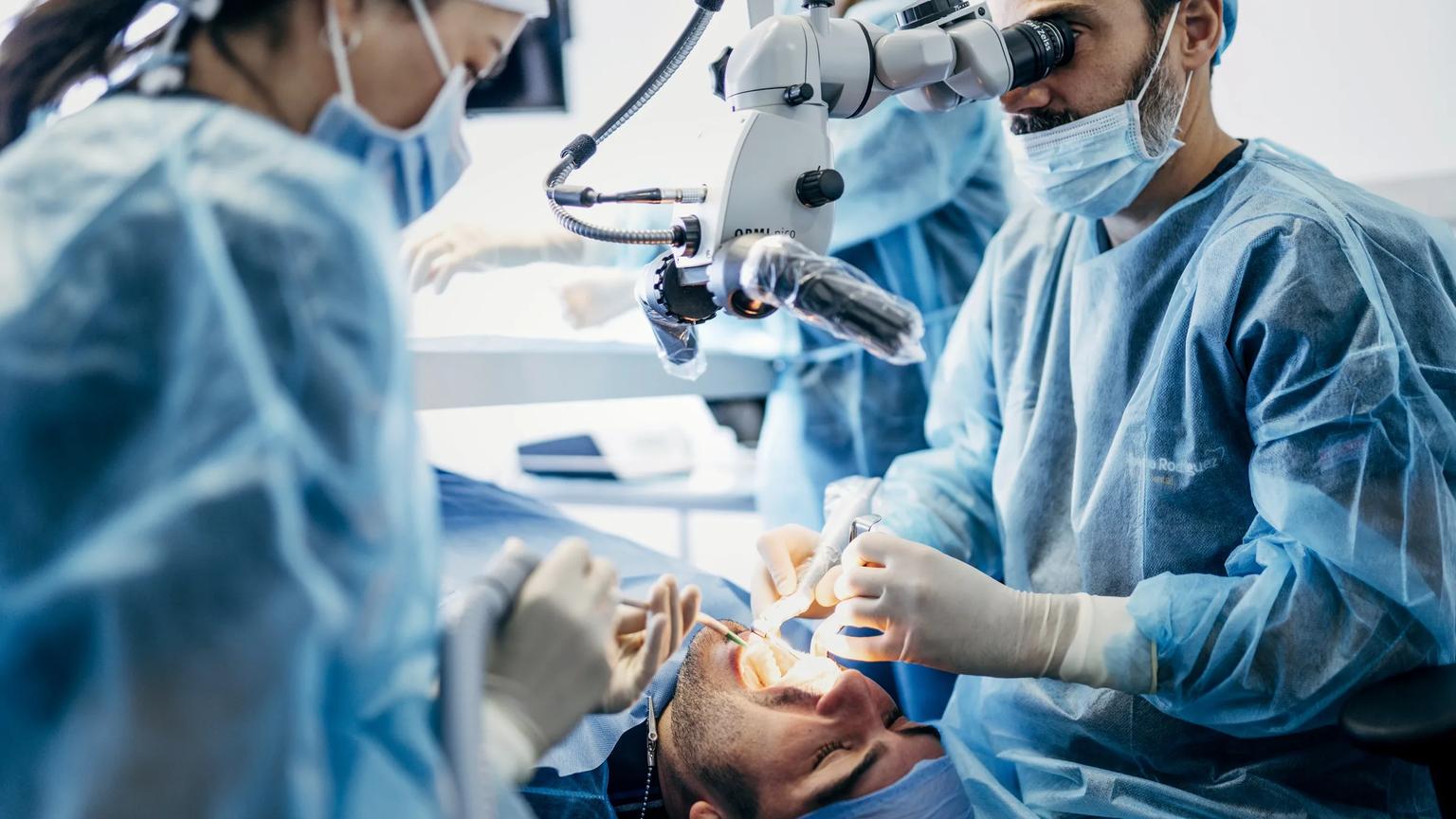
Gynaecological oncology theatre lists where scheduled, open or minimally invasive, followed as a non-sterile observer.
Pre-operative counselling and consent for cancer surgery, including discussion of fertility-sparing options where they are relevant.
Colposcopy in the outpatient clinic, where pre-invasive cervical disease is assessed and managed and suspected invasive disease enters the cancer pathway.
Post-operative care on the gynaecology ward round: recovery after major pelvic surgery, complications and the return of final histology.
How final pathology is typically brought back to the tumour board to settle adjuvant treatment and follow-up.
Sentinel lymph node mapping or other specific techniques, only where the department schedules them during your dates — confirmed after review.
How does a gynaecological cancer tumour board reach a treatment plan?
In gynaecological oncology the operation is one step in a pathway that begins and ends at the tumour board. A new referral, such as an ovarian mass or a biopsy showing endometrial or cervical cancer, is reviewed with its imaging and histology; boards of this kind typically include gynaecological oncologists, radiologists, pathologists and medical and radiation oncologists. The board decides whether surgery comes first, whether chemotherapy or chemoradiation is the better primary treatment, and whether the patient is fit for the plan. Observers attend the weekly board and listen as these decisions are reached, with teaching for observers given in English.
The tumour site shapes the decisions you hear. Endometrial cancer is usually treated surgically, with minimally invasive hysterectomy and staging where suitable, and molecular classification increasingly guides adjuvant treatment. Early cervical cancer may be managed surgically, whereas locally advanced disease generally goes to chemoradiation. In advanced ovarian cancer the central question is whether complete cytoreduction is achievable at primary surgery or only after neoadjuvant chemotherapy. Fertility-sparing options are discussed for selected younger patients with early-stage disease. Which of these situations arise during your dates depends entirely on the referrals the department receives.
Surgery is followed by its own sequence. On the ward round, observers see recovery after major pelvic and abdominal surgery, the management of complications and the arrival of final histology. Final pathology then returns to the board, where adjuvant treatment and the follow-up schedule are agreed. The surgical approach is itself an oncological decision: for radical hysterectomy in early cervical cancer, randomised evidence has led major guidelines to favour open surgery, whereas minimally invasive surgery is standard for most early endometrial cancer. Robotic technique as such is covered on its own focus page.
How this page differs
This page follows one service, gynaecological cancer care, from referral and tumour board to theatre, ward and follow-up, whereas the gynaecological surgery page spans every list in the department. Robotic surgery appears here only as one possible approach, described in depth on the Robotic Gynaecological Surgery page, and benign disease such as endometriosis has its own page.
Who applies, and which route fits?
Clinical Observership
Senior students and graduate physicians drawn to gynaecology or to oncology who want to see surgical, chemotherapy and radiotherapy decisions fitted together around one patient.
Clinical Fellowship
Suited to obstetrician-gynaecologists with a specialist qualification whose stated interest is gynaecological cancer care; other recognised specialists may apply, with fit decided by the department. Over 12–24 months you follow tumour board decisions through to their outcomes.
What an observer does not do
Both routes are strictly observational: observers attend theatre and clinic without patient contact, do not scrub or assist, and are not assessed on any procedure.
Tumour sites, stages and procedure types depend on referrals during your dates; no particular cancer or operation can be promised.
Observers listen at the tumour board but do not present cases or take part in treatment decisions.
Theatre is followed from outside the sterile field, and clinic and ward attendance involves no patient contact.
The certificate documents attendance; it is not subspecialty training and confers no gynaecological oncology qualification.
The two routes at a glance
The two routes side by side
Clinical Observership
Clinical Fellowship
Duration
1, 2 or 4 weeks (extension possible on request)
12 to 24 months, agreed with the host department
Who it is for
Medical students in clinical years and graduate physicians from outside Turkey
Recognised specialists and family physicians seeking advanced exposure beyond standard specialty training
Extended observational attachment to one department: daily practice, service structure and specific techniques
Certificate
Certificate of attendance issued by the host hospital and signed by its Medical Director
Certificate on completion issued under the accreditation of the affiliated university school of medicine
Start
Rotations typically begin on a Monday; dates are agreed individually
Start date planned around the date you request and the department's capacity
Before you apply
The programme is delivered in English and every applicant evidences their level with an official document.
Fees and terms are confirmed in writing after the eligibility review; they are not published on this page.
Apply three to six months ahead: departments accept only one or two observers at a time and files are reviewed in order.
State your focus in the objectives of your application. Allocation follows the department's lists during your dates.
What do candidates ask about Gynaecological Oncology?
Which tumour pathways may be observed?
Those the department's referrals bring during your dates. A gynaecological oncology service typically manages ovarian, endometrial, cervical and vulval cancers, and the colposcopy clinic sees pre-invasive cervical disease; the department's published scope names gynaecological oncology lists, the weekly tumour board and colposcopy. The mix in any one week cannot be predicted or promised, and rarer tumours may not arise at all. State the tumour sites that interest you in your objectives; ATDERA raises them with the department during the review, and a longer placement widens what you are likely to follow.
How does an observational attachment differ from specialist fellowship training?
Subspecialty training in gynaecological oncology, as structured in many countries, is a supervised clinical post: the trainee undertakes surgery with graduated responsibility, manages patients, is assessed against a curriculum and works towards a recognised subspecialty qualification. The host programme's Clinical Fellowship is different in kind. It is a 12-to-24-month observational attachment to the gynaecological surgery department, with no patient contact, no surgical role, no assessment of competence and no subspecialty qualification. Its value is sustained exposure to tumour board reasoning and the whole care pathway; its certificate documents completion, not competence.
Will I see laparoscopic or robotic cancer surgery?
Where such cases are scheduled. The department runs laparoscopic and open lists, and robotic cases are scheduled alongside conventional laparoscopy where the system and the case allow. In gynaecological oncology the approach follows the oncological indication: minimally invasive surgery is standard for most early endometrial cancer, whereas open surgery is generally favoured for radical hysterectomy in cervical cancer and for extensive ovarian cytoreduction. You therefore see the approach as a consequence of the tumour board's plan. There is no console time in either route.
Is this focus useful if I am not a surgeon?
Yes, for physicians whose interest is the multidisciplinary side of cancer care. The weekly tumour board, the colposcopy clinic and the ward round are within the department's usual scope, and they show how imaging, pathology and non-surgical treatment options are weighed alongside surgery for each patient. The observership is open to graduate physicians from outside Turkey; the fellowship requires a recognised specialist qualification, with fit for non-gynaecologists decided by the department. State your background and objectives clearly so the team can weight your time where the schedule allows.
Apply for an observership with Gynaecological Oncology as your focus
One online application for both routes. State Gynaecological Oncology as your focus in your objectives; ATDERA reviews the file and prepares it for the Gynaecological Surgery department, then replies with next steps, typically within two working days.
Five short steps: your details, education, programme choice, documents and declaration.
A personal link by email, so you can leave and return where you stopped — for 60 days.
Documents are uploaded in step 4; you need nothing to hand to begin.
ATDERA Global Limited (Companies House No. 17173428, registered in England and Wales) coordinates this programme for a university teaching hospital in Istanbul. ATDERA is not a hospital and does not provide clinical care; admission decisions and certificates are the host hospital's.
Ready to apply?
One online application covers both routes and all twenty-one specialties — details, programme choice and documents in five short steps. ATDERA reviews the file and replies with next steps, typically within two working days.