

The two ceramics in plain terms — lithium disilicate (E-max) and zirconia
Lithium disilicate is a glass-ceramic in which microscopic crystals of lithium disilicate (Li2Si2O5) are embedded in a glass matrix. The most widely used commercial system is IPS e.max from Ivoclar Vivadent, which has been in routine clinical use for veneer and crown work for over twenty years. The material is fabricated by pressing or by milling, and the resulting restoration combines the optical depth of a glass-based ceramic with the structural strength provided by the disilicate crystal phase. Lithium disilicate is the standard reference material for anterior veneers and single-unit crowns where shade match and translucency are clinically primary.
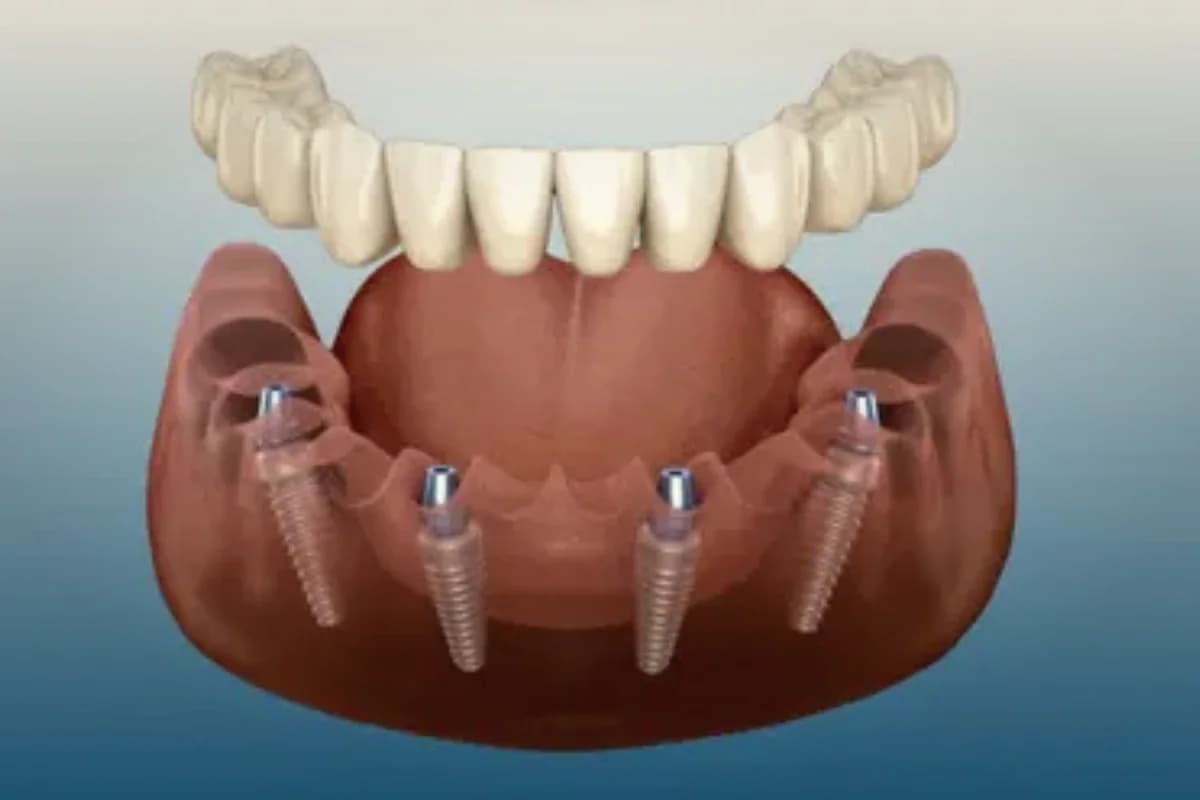
Zirconia is a polycrystalline oxide ceramic — yttria-stabilised tetragonal zirconia polycrystal (Y-TZP) — in which the structure is composed of densely packed zirconia crystals without a glass phase. The two principal commercial families used in veneer and crown work are the high-translucency zirconias supplied under brand names including VITA and Katana. Zirconia is fabricated by milling a pre-sintered block to the planned dimensions and then sintering the milled unit to full density. The material's mechanical strength is substantially higher than lithium disilicate, which makes it the standard reference for posterior load-bearing restorations and for full-arch implant-supported prostheses.
The two ceramics are not interchangeable. They differ in chemistry, optical behaviour, mechanical performance, the tooth preparation each requires, the bonding chemistry that works for each, and the long-term clinical pattern reported in published systematic reviews. The unit-by-unit material decision in any multi-unit restoration is made by the verified partner aesthetic dentist on review of the existing dentition, the prosthetic plan, and the occlusal profile. This article reads each of the comparison axes in turn so the patient can read the clinical rationale before reading the case-specific written estimate.
The chemistry and microstructure — what makes each material behave differently
Lithium disilicate is composed of approximately 70% lithium disilicate crystal phase by volume embedded in a glass matrix. The crystal structure is interlocking and platelet-shaped, which produces a network that resists crack propagation through the bulk of the material. The remaining 30% glass phase carries the optical properties — translucency, light scattering, and the depth of colour transmission that mimics natural enamel and dentine in the visible smile zone. The combination of crystal reinforcement and glass-phase optics is what gives lithium disilicate its dual identity as both a structurally adequate and optically natural anterior material.
Zirconia is a fully crystalline material. The yttria-stabilised tetragonal structure has no glass phase at all, which is the source of both its mechanical advantages and its optical limitations. Under stress, zirconia's tetragonal crystal phase undergoes a transformation toughening mechanism — small regions of the material transform from the tetragonal to the monoclinic phase under crack tip stress, expanding in volume and arresting crack propagation. This transformation toughening gives zirconia its characteristic crack resistance. The absence of a glass phase, however, makes zirconia inherently more opaque than glass-based ceramics, and the high-translucency formulations used in aesthetic work are specifically engineered to address that limitation through controlled grain size and yttria content adjustment.
The microstructural difference matters in clinical practice for two reasons. The first is that the glass phase in lithium disilicate is what enables the material to be acid-etched with hydrofluoric acid, creating the micromechanical retention that supports adhesive bonding to the prepared tooth. Zirconia has no glass phase to etch, which is why the bonding chemistry is fundamentally different and is discussed separately below. The second is that the manufacturing route is different — lithium disilicate is pressed or milled in a partially crystalline state and then crystallised by firing, while zirconia is milled in a pre-sintered chalk-like state and then sintered to full density. Each route has implications for the precision of the final fit and the laboratory turnaround time at the on-site ceramic laboratory.
Optical properties — translucency, light transmission, and how each looks on a tooth
Lithium disilicate's optical signature is high translucency with depth of colour transmission. Light entering a lithium disilicate veneer or crown passes partially through the bulk of the material and reflects from the underlying tooth structure, then re-emerges at a slight delay and with a slight shift in shade — the visual phenomenon known as fluorescence and opalescence in natural enamel. The optical effect mimics the layered enamel-dentine structure of a natural tooth, and it is the principal reason lithium disilicate is the standard reference for anterior veneers and single-unit crowns where the shade match against adjacent natural teeth is the dominant clinical variable.
Zirconia in its older monolithic formulations was substantially more opaque than lithium disilicate, with a flatter optical signature that read as too white or too uniform on anterior units. The development of high-translucency zirconia families — VITA YZ HT, Katana UTML and STML, and equivalent products from other manufacturers — has narrowed but not eliminated this gap. High-translucency zirconia approaches lithium disilicate in optical depth and is increasingly used in anterior cases where the case profile favours zirconia's mechanical advantages over lithium disilicate's optical advantages. The verified partner aesthetic dentist evaluates the optical fit on the digital smile design and on the on-site mock-up before the unit-by-unit material decision is finalised in writing.
Where the patient's existing dentition includes a high-value reference shade (for example, a single anterior tooth with a particular natural translucency that the restoration must blend against), lithium disilicate is the more reliable starting point for shade match. Where the case is a coordinated multi-unit restoration of the entire visible smile zone with no adjacent natural reference (for example, a Hollywood smile design across the upper anterior eight to ten units), high-translucency zirconia or a hybrid plan combining lithium disilicate at the most visible positions and zirconia at the load-bearing positions may produce the more durable long-term outcome. The clinical decision is read on the case-specific dentition rather than on a default per-procedure mapping.
Mechanical properties — flexural strength, fracture resistance, and where each is structurally appropriate
Lithium disilicate's flexural strength sits in the 360 to 400 megapascal range as cited in manufacturer literature and peer-reviewed materials testing. The material is structurally adequate for veneers, single-unit crowns, and short-span anterior bridges. Its fracture pattern under failure tends to be a clean catastrophic failure rather than a slow propagation of micro-cracks, which means that an intact lithium disilicate restoration generally remains serviceable up to the point of failure, and a failed lithium disilicate unit is replaced as a single restoration rather than monitored through a slow degradation profile.
Zirconia's flexural strength sits in the 900 to 1,200 megapascal range for the high-translucency formulations used in veneer and crown work, and substantially higher for the load-bearing formulations used in posterior crowns and full-arch implant-supported prostheses. The transformation toughening mechanism described above adds a fracture-resistance reserve that lithium disilicate does not have. In clinical terms, zirconia is the standard reference for posterior load-bearing restorations, for patients with heavy occlusal forces or parafunctional bruxism, for full-arch implant-supported prostheses, and for any case where the structural working life of the restoration is the dominant variable.
The mechanical comparison is not a ranking. Lithium disilicate is structurally adequate for the cases for which it is indicated — anterior veneers, single-unit anterior crowns, low-load aesthetic restorations — and choosing it for those cases is not a structural compromise. Zirconia is structurally over-specified for some of those cases, and choosing it is not a structural upgrade in the sense of more security, but a different optical and bonding-chemistry trade-off the patient and the verified partner aesthetic dentist need to read together. The unit-by-unit material decision is the clinical conversation that converts the comparison axes in this article into a case-specific recommendation.
Where the patient has documented bruxism, a heavy biting pattern, or a previous history of fractured ceramic restorations, the case profile shifts toward zirconia for the load-bearing units and toward a custom night guard for protection of any anterior lithium disilicate units. Where the patient has a refined natural shade and a low-load anterior aesthetic case, the profile shifts toward lithium disilicate for the visible units. Mixed cases — lithium disilicate at the central and lateral incisors for shade match, zirconia at the canines and posterior units for load resistance — are clinically routine, and the unit-by-unit rationale is documented in the case-specific written estimate before fabrication begins.
Preparation requirements — minimum thickness and enamel reduction by material
Each ceramic system has a minimum thickness specified by the manufacturer below which the structural integrity of the restoration cannot be reliably supported and below which the fabrication tolerances cannot reliably be met by the on-site ceramic laboratory. Lithium disilicate veneers are typically prepared at 0.3 to 0.7 millimetres of labial enamel reduction, with the thinner end of the range used in cases where the existing tooth shade is close to the planned restoration shade and the thicker end used where additional masking is required for a darker underlying tooth or where additional optical depth is needed in a coordinated multi-unit case.
Zirconia veneers — increasingly used as high-translucency formulations have improved — typically require similar labial reduction to lithium disilicate in the 0.5 to 0.7 millimetre range, with slightly more reduction sometimes needed where the case requires a more substantial prosthetic correction at a single tooth or where the underlying tooth structure favours full-coverage rather than veneer-only restoration. Full-coverage zirconia crowns require more substantial preparation — typically 1.0 to 1.5 millimetres of axial reduction and 1.5 to 2.0 millimetres of occlusal reduction — to provide the bulk of material the manufacturer's specification requires for the flexural strength to be realised in the finished restoration.
The preparation depth is not a free variable that the clinician can reduce to satisfy a patient's preference for a more conservative restoration. The minimum thickness specification is structural, and a restoration prepared too thin will fail predictably during the first one to two years in function. The verified partner aesthetic dentist on the ATDERA pathway documents the planned preparation depth unit by unit in the digital smile design, calibrates the on-site mock-up against the agreed preparation, and proceeds to the preparation appointment only after the patient has signed off on the proposed outcome. Where the patient's preference for minimal preparation conflicts with the structural requirement of the chosen material, the conversation returns to the material decision rather than to the preparation depth.
Bonding chemistry — how each ceramic bonds to enamel and dentine
Lithium disilicate is acid-etchable. The internal surface of the prepared veneer or crown is treated with hydrofluoric acid to create the micromechanical retention pattern, then rinsed and dried, then primed with a silane coupling agent that chemically bridges the ceramic to the resin cement. The prepared tooth surface is etched with phosphoric acid and bonded with a dental adhesive primer. The two surfaces are then bonded together with a light-cured or dual-cured resin cement following the manufacturer's protocol. This adhesive bonding mechanism is well established in clinical literature and produces a durable interface between the ceramic and the underlying tooth structure when performed by a trained clinician.
Zirconia is not acid-etchable. The crystalline structure has no glass phase to etch, and hydrofluoric acid produces no usable retention pattern on the internal surface of a zirconia restoration. The bonding chemistry for zirconia is therefore fundamentally different. The internal surface is air-abraded with aluminium oxide particles to create surface roughness, then chemically primed with a phosphate-monomer adhesive (most commonly 10-MDP, the molecule found in adhesive systems such as Panavia and Clearfil), which forms a chemical bond with the zirconium oxide surface. The prepared tooth is then bonded with a cement system specifically formulated for zirconia, typically a self-adhesive resin cement or a conventional resin cement used with the appropriate dental adhesive primer.
The bonding chemistry difference matters in two clinical situations. The first is where the clinician needs to remove and reposition a try-in restoration before final cementation — lithium disilicate's adhesive bonding window is more forgiving for this clinical step, while zirconia's chemical priming once contaminated may require re-priming before cementation. The second is in revision work — where a lithium disilicate veneer is debonded and re-bonded years later, the bonding protocol can typically be repeated; where a zirconia restoration is debonded, the surface may require re-air-abrasion and re-priming before re-cementation. The verified partner aesthetic dentist documents the bonding protocol in the structured handover document the patient travels home with so the patient's UK or home-country dentist has the cement and primer specification on file for any future revision.
Long-term clinical data — survival rates, wear patterns, and the 10–15 year window
Long-term clinical literature reports porcelain veneer survival above 90% at ten years where the restoration is bonded by a trained clinician and supported by routine professional maintenance. Lithium disilicate-specific systematic reviews report similar or slightly better outcomes — the published clinical follow-up on IPS e.max anterior restorations covers a meaningful number of cohort studies extending to fifteen and twenty years. Failure modes at long-term review include marginal staining, ceramic chipping at the incisal edge under heavy load, and shade drift at the bonded interface as the underlying tooth structure ages.
Zirconia in single-unit crown work reports survival above 95% at ten years in published systematic reviews, with the strongest data on monolithic zirconia crowns in posterior load-bearing positions. High-translucency zirconia veneers are a more recent application, and the long-term follow-up data is less mature than for lithium disilicate, but the early-window evidence and the underlying mechanical profile of the material both support the expectation of comparable or superior long-term performance. The principal failure mode reported in the published literature is opposing dentition wear — zirconia is harder than natural enamel, and a poorly polished or heavily occluded zirconia restoration can accelerate wear on the opposing natural tooth surface, which is one of the reasons surface-polished or glaze-fired finishes are the standard finishing protocol on zirconia restorations in routine clinical use.
The 10–15 year window is the typical replacement consideration for both materials in routine cases. Replacement at this stage is usually driven by changes in the surrounding biology — gum recession exposing the cervical margin, age-related shade drift in the surrounding natural dentition, occlusal wear changing the bite pattern — rather than by failure of the ceramic itself. The original case file (digital design, ceramic system, preparation depth, bonding protocol) is retained in ATDERA's pathway file so that any revision is built against the original specification rather than reconstructed from intra-oral imaging. The implant or prosthesis passport, where the case includes implant-supported units, captures the relevant manufacturer data for the same long-term reference function.
The unit-by-unit decision in a multi-unit case
In a multi-unit case — anterior aesthetic redesign across six to ten units, or a coordinated Hollywood smile design across the upper visible smile zone — the material decision is made unit by unit rather than as a single uniform choice across the case. The verified partner aesthetic dentist reads each unit independently against the four comparison axes in this article: the unit's structural condition (intact enamel versus heavily restored), the unit's position in the smile zone (high-visibility anterior versus posterior load-bearing), the unit's occlusal profile (low-load versus high-load), and the unit's role in the coordinated optical plan (anterior shade match against adjacent natural reference versus uniform multi-unit redesign).
A typical mixed-case configuration might use lithium disilicate at the upper central and lateral incisors for the highest-value optical match against any visible adjacent natural reference, high-translucency zirconia at the upper canines and first premolars for load resistance and for a slightly more uniform optical signature in the coordinated zone, and zirconia full-coverage crowns at any heavily restored or root-treated unit elsewhere in the smile zone. The rationale for each unit is documented in the case-specific written estimate before fabrication begins, and the unit-by-unit specification is recorded in the structured handover document the patient takes home for their UK or home-country dentist.
Where the patient has a strong preference for a single-material case — most commonly because the patient has read the marketing literature for one material and prefers the simplicity of a uniform choice — the verified partner aesthetic dentist documents the rationale for or against the unit-by-unit recommendation in writing. A single-material case is structurally appropriate where the unit-by-unit profile favours the chosen material across all positions, and is a clinical compromise where the profile favours a mixed plan. The patient reads the rationale alongside the case-specific written estimate and makes the decision before any preparation proceeds.